


India. Part 16
Description
This section is from the book "India - John L. Stoddard's Lectures", by John L. Stoddard. Also available from Amazon: John L. Stoddard's Lectures 13 Volume Set.
India. Part 16
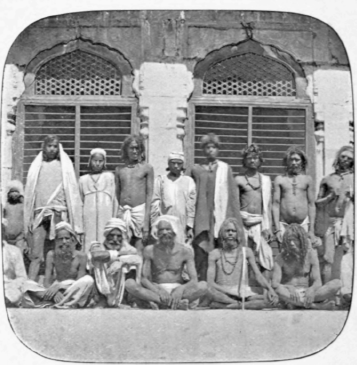
Slaves Of Superstition.

Chair-Bearers, Darjeeling.
There are four principal castes in India, though these have countless subdivisions. The inventors of this social despotism were naturally the highest in the scale, - the Brahmins. They coolly tell the rest of the world that they sprang originally from the mouth of Brahma, the Supreme Being. Accordingly, no matter whether they are rich or poor, no matter what may be their occupation, the members of all other castes must yield them homage and obedience. Formerly, whatever crimes they might commit, their personal property could not be seized. Even now their persons are sacred. The Hindus believe that if any one strikes a Brahmin, even with a blade of grass, he will be punished by being an inferior animal for the next twenty-one generations.
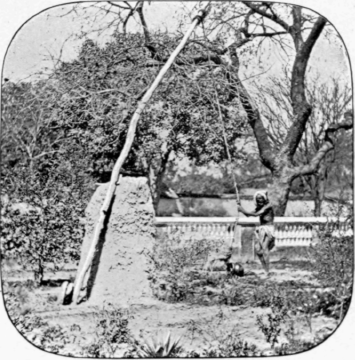
A Peasant.
The other Hindu castes are, in the order of their rank, the warrior class, the merchant class, and the servile class, springing respectively from Brahma's arms, thighs, and feet. Below them all are the degraded Pariahs, who are casteless, and are regarded as almost too vile to belong to humanity. Can anything be more discouraging than the hopelessness of this? As one is born in India, so he dies. These class distinctions are hereditary and inexorably fixed. No one can rise into a higher rank. Once a Brahmin, one is always a Brahmin; once a Pariah, always a Pariah.

A Village Scene.
Few foreigners have any idea how extremely rigid and severe the rules of Indian caste can be. Nothing, for example, would induce the poorest Hindu to eat roast beef with the Empress of India herself. He would believe that by partaking of it he would defile himself for time and for eternity. It is said that a European, from motives of revenge, once seized and bound a wealthy Brahmin, and, after a desperate struggle, forced some beef and brandy down his throat. As a result, although the Hindu had been clearly overpowered and made incapable of resistance, he was considered to be defiled, and lost his caste. Every effort was made to reinstate him, but for years in vain. Finally, after the payment of one hundred thousand dollars, the unfortunate man regained his caste, although, in addition to the fortune thus expended, he was obliged to submit to physical penaltiestoo revolting to be mentioned. Lying, stealing, fraud, and adultery can be atoned for in India without loss of caste, but to eat of the "sacred cow" is for the Hindu the unpardonable sin. Imagine, therefore, what would be the feelings of a Hindu who visited the stock-yards in Chicago, and saw an ox or a cow, to say nothing of other animals slaughtered every minute! Nor will a high-caste person allow one of low caste even to obtain water from his well. He thinks that thus the well would be defiled. If he saw a Pariah dying of starvation he would not go to his relief for fear of contamination. The penalties for being thus contaminated are terrible. A man who has lost caste is the most wretched of human beings. Even a Pariah is less pitiable. His property is confiscated to the caste from which he has father; his wife is freed from all her conjugal obligations; and even his father and mother would refuse to eat with him or to give him a morsel of food. Though the offense should have been accidental, the penalty is just the same; for the defilement has taken place, and cannot be effaced. Can we, then, wonder that this system of caste has broken the spirit of the people? The servile class will often ask a Brahmin to wash his feet in the water of the street, that they may then drink it. They take the ofttimes brutal treatment of Europeans without resentment; and instances are known of natives coming to their English masters, when they had a special favor to ask, with grass in their mouths, saying that they were their beasts.

One Of The Lowly.

One Of The Exalted.
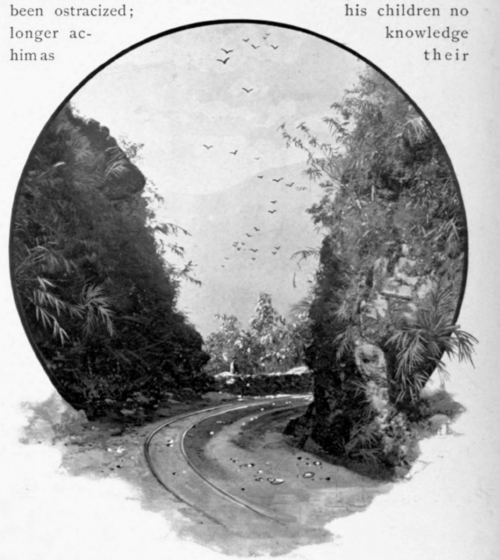
Upward To The Mountains.
Continue to:


My Books

