


Wine Of The Second Quality
Description
This section is from the book "Mrs. Charles H. Gibson's Maryland And Virginia Cook Book", by Charles H. Gibson. Also available from Amazon: Mrs. Charles H. Gibson's Maryland And Virginia Cook Book.
Wine Of The Second Quality
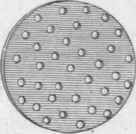
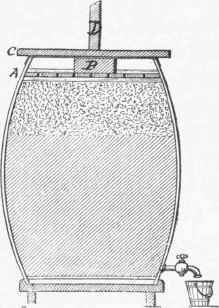
After the grapes are pressed the skins and seeds should be thrown into a stand cask containing the following mixture: Twenty-three gallons rain water, fifty-three pounds grape sugar, one pound crystals of tartaric acid. This is normal wine, as to its proportions of free acid, grape sugar, and water, and will contain about ten per cent. of alcohol, say the strength of claret. Should it be desired to make it stronger, twenty-three gallons rain water, ninety pounds grape sugar, one pound crystals tartaric acid will give the normal wine of the strength of sherry, say seventeen to eighteen per cent. alcohol. Having determined the strength you want, throw in the skins and seeds of, say, three to four hundred pounds of grapes, that is whatever is left after each pressing. It is best to put in the pumice immediately, and thus save the surface of the skins of seeds from the action of the atmosphere. It is essential that the stand cask shall have a floating lid, perforated with half inch holes, so that the skins, which arise when the fermentation begins, shall be kept covered with fluid.
A, Floating perforated lid resting on the fluid.
B, Block resting on the floating lid.
C, Wooden cover; under which is a cloth covering the barrel.
D, An upright piece, reaching to the ceiling of the cellar to fasten the wooden cover down to the barrel.
The violent fermentation in the stand cask lasts about ten days, and as the skins come to the top they must be well stirred up every morning. At the end of ten days the skins will begin to sink, when the fluid may be run off at the tap, and the refuse pressed, barreled, and treated as the juice of the first pressing.
Should you desire to make wine vinegar take twenty-three gallons rain water, fifty-three pounds grape sugar, one pound tartaric acid, and put back the skins and seeds of the second pressing. Treat precisely as you did the second grade wine.
Stir for the first ten days in the stand cask, and when well fermented press again and put the fluid in a barrel, the bung of which is a straw plug, and set in a warm shed until it becomes vinegar.
Having given receipts for the manufacture of wine, it follows that the best foreign modes of preserving it are essential. I therefore quote from John J. Griffen's work, "Chemical Testing of Wines and Spirits," 1866, page 128, London.
Continue to:


My Books

