


Fancy Skipping For Children
Description
This section is from "Every Woman's Encyclopaedia". Also available from Amazon: Every Woman's Encyclopaedia.
Fancy Skipping For Children
Principal of The Physical Training College, South Kensington
The Value of Skipping in Health and Development - How Not to Skip - The Way to Hold and Throw the Rope - Some Fancy Exercises - Some Other Methods of Skipping
Gripping is the finest exercise in the world - in moderation.
There are many parents and teachers who regard skipping as the root of all evil, and think it should be studiously avoided, simply because various cases of harm caused by the immoderate or foolish use of a skipping-rope have come under their notice.
Injudiciously and carelessly used, a skipping-rope can do more harm than good. But I contend, from years of experience with thousands of children who have skipped at my classes, and, far from being harmed, have derived the greatest benefit from the healthy exercise, that, properly regulated, moderate skipping is the finest thing for children from four years of age upwards.
When it is remembered that men in training for rowing and football skip for five or ten minutes at a time, and that certain celebrated actresses no longer in their first youth, and famous for the beauty of their figures, confess that five minutes' skipping every morning has enabled them to retain their slim-ness, it must be admitted that judicious skipping is both beneficial and harmless.
I feel that in writing an article on skipping for children 1 cannot lay sufficient stress on the fact that the use of a skipping-rope must always be moderate and judicious. That i 9 why I should like to beg all parents and teachers, when giving their children a rope and permission to " skip," to stay and watch each child as long as it is skipping, and to take away the rope when it is obvious that the child has had enough.
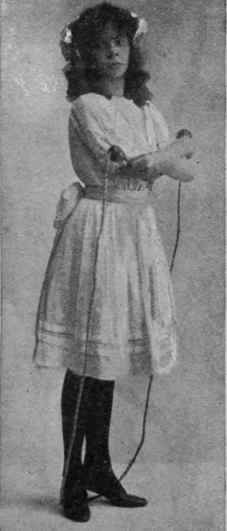
Fig. 2. The cross. The arms are crossed, the right one being uppermost; the rope should just come under the feet
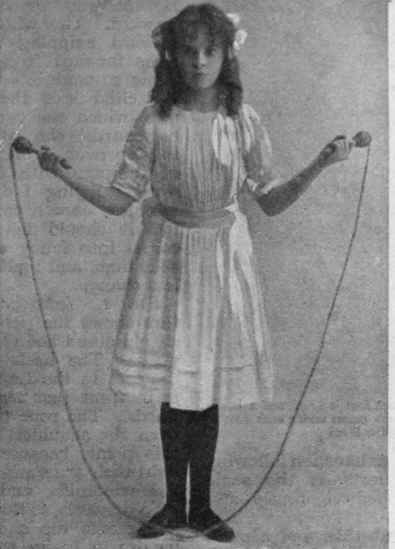
Fig. I. The Introductory position, with heels together and rope in front. The rope must be turned from the wrist, not the shoulder
Photos. Stephanic Maud.
It is by skipping for too long at one time, or continuing such violent exercise when out of breath, that harm is done. So many parents give quite a tiny child a rope and go away, leaving the baby thing to skip at its pleasure, and quite sure that it can come to no harm. It can come to very grave harm, so let me again beg parents to watch their children while they skip.
Why, the mere exertion of lifting the rope tires a child very quick-1y, and causes it to become breathless.
And, while a rope is in its hands, a child's first instinct is to continue jumping as high and as often as possible. So, whether a baby actually skips or not, the exhaustion following its efforts - primitive efforts - is the same as though it had skipped vigorously and correctly.
and the rope swung upwards and round in a
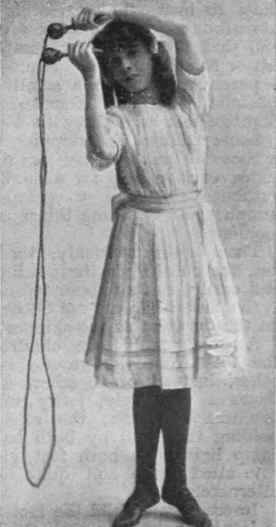
Fig. 3. Round the head. The arms are raised complete circle from the wrists made upon the other foot. The rope passes under each foot in
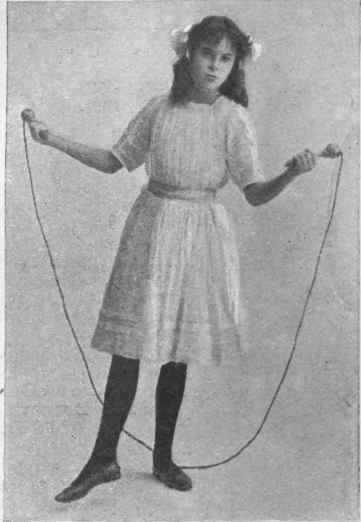
Fig. 4. Spring and hop. In turn each foot is lifted, and a hop is turn, with the other lifted
Parents seem to forget this, and also to forget that a child has not the sense to know when it has had enough. That is why somebody older and wiser should be there to insist that a rest is taken every few minutes for the recovery of the breath, and that the skipping ceases entirely after ten or fifteen minutes. If only this is done a parent may train a small child in this splendid form of exercise without the slightest fear of bad results.
Some children find skipping very difficult. A boy or girl of five or six sometimes endeavours to skip for a month, or longer, without being able to grasp the idea of jumping and throwing the rope at the same moment.
Then, quite suddenly, the idea comes, and the child finds itself skipping properly and easily, to its unbounded delight. That is the time when a stern check must be put on the duration of the skipper's efforts.
A great fault with children is to lift the feet from the ground one after the other, instead of together, and this produces a very ugly, jerky movement. To counteract it, take the rope away, and, holding the child by both hands, make it jump lightly on both feet, giving a moderate sized jump and quite a tiny jump alternately.
Impress on a child the fact that the rope is less than half an inch thick. Therefore it is only necessary to lift the toes an inch from the ground for the rope to pass under them. Most children, when learning, exhaust themselves by trying to jump much too high.
To teach a child plain skipping (backward skipping) the teacher should stand in front of her pupil and jump slightly to emphasise the time and size of the child's springs. By the way, never teach children to skip forward. The whole of the movement in forward skipping is bad. It throws the arms forward from the shoulders, and in doing so contracts the chest ; and because the child sees the rope approaching her feet (which she cannot do when it travels backwards) she is doubly inclined to try to step over it, one foot at a time, instead of jumping with both feet together. Forward skipping for a short time is quite harmless once a child can skip backwards, but it should never be taught first. It comes into fancy exercises for a few bars at a time, and makes a welcome and harmless change.
Continue to:


My Books

