


Hand And Mechanical Power
Description
This section is from the book "Welding And Cutting Metals By Aid Of Gases Or Electricity", by L. A. Groth. Also available from Amazon: Welding and cutting metals by aid of gases or electricity.
Hand And Mechanical Power

Fig. 35. - Hand Chain Welding Machine, for Chains up to 6 mm. diameter.
Special welding machines are constructed for welding one particular kind of article, and should be selected in those cases where great numbers of the article are to be welded, for instance, chains (Figs. 35, 36, 37, 38), buckles (Figs. 39, 40), door-hinges, hinge-hooks, hinge-bands, etc., for doors and cupboards (Fig. 41); end-to-end welding of flat hoops, rings (Fig. 42); for simultaneously welding several pins or pieces of metal to discs or rings of metal, for instance, as used in watch and clock-making (Fig. 43); for point welding in making iron furniture, grills, etc. (Fig. 44); for welding pulley-spokes to rim and hub (Fig. 45); for welding automobile and cycle rims (Fig. 46), and the like. Special machines are constructed for an infinite number of specialised purposes. In many cases, especially for small articles, the special machines may be converted into automatic machines. The removal and replacement of the articles is then performed by mechanical means, or in some cases by electro-magnets, and the functions of clamping and releasing, pressing together, opening and closing the circuit are under the influence of automatic relays connected with mechanical driving power, which is applied or shunted off at the right time by frictional devices.

Fig. 36. - Automatic Chain Welding Machine, for Small Chains.

Pig, 37. - Automatic Chain Welding Machine, for Large Chains.
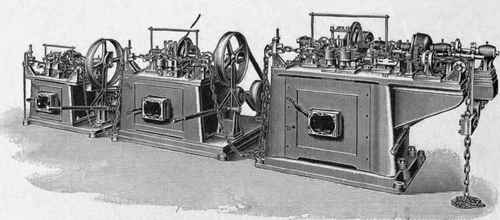
Fig. 38. - Automatic Chain Welding Machine.
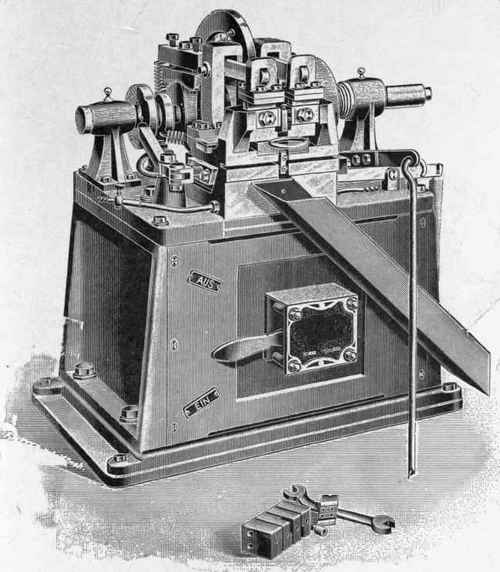
Fig. 39. - Ring and Buckle Welding Machine, for Ridgeless Welding.
in Swages, Machine-driven.

Fig. 40. - Buckle Welding Machine, with Transformer.
These automatic machines do not require a special attendant, as one man can attend to several machines at the same time. The field of such machines is limited by the size and weight of the articles to be welded, and they are therefore more especially suited for welding small articles in very large quantities, where the occasional appearance of a defective piece is of no moment. For these machines it is important to have the articles previously prepared exactly alike, as even a small difference in the dimensions of the single article leads to unsatisfactory results.
The pressing together of the hot metal at the point of welding results, as already stated, in the formation of a burr, which must in most cases be afterwards removed.
The machines are sometimes provided with a device for surrounding the point of welding, as soon as the right temperature has been reached, with a swage (Fig. 39, page 101), whereby the welding is completed without a burr; such a joint is especially strong, as the hot, soft metal receives a lateral pressure from the swage, thereby greatly increasing the density of the metal at the weld.
In case of larger articles an automatic hammer with adjustable anvil can be substituted for the swage; this hammer is so arranged that the burr can be hammered down during the continuation of the heat.
The energy and time required for welding are approximately proportionate to the sectional area of the parts to be welded. It is possible to weld a given piece either by using greater power during a short time or by exerting a smaller power during a longer time ; but, in order to ensure rational working, it is necessary for time and power to stand in certain proportions to each other, which differ for different areas and different materials.
The permanent working of a machine increases the heating of those parts of the machine which are nearest to the weld. In order to keep the heating within admissible limits, water-cooling is provided. If there are no water mains two tanks may be provided, one placed higher and the other lower than the machine, so that the water from the upper tank can flow through the machine into the lower tank. A moderate supply of water, from 20 to 100 litres per hour, is sufficient, according to the size of the machine.

FlG. 41. - Special Machine for Welding Door-hinges, Hinge-hooks, Hinge-bands, etc., for Doors and Cupboards.
Primary Plants. - Electric welding machines, as already stated, require alternating current for their operation. In the case of direct welders, which can, however, only be considered for small types, the machine generates its own alternating current. Even if it is possible to use such direct welders for the small size, it will always be more desirable and of greater advantage to provide separate welding machines, and to take the necessary alternating current from a generating plant.

FIG. 42. - Machine for End to End Welding of Flat Hoops, Rings, and similar Articles.
The machines can be adapted to any existing plant for alternating current, whatever the voltage and periods.
Such a primary plant comprises -
(a) The generator for single-phase alternating current with exciting dynamo, or with separate excitement (by existing direct current);

Pig. 43. - Machine for Simultaneously Welding several Pins or Pieces of Metal to Discs or Rings of Metal (for use in Watch and Clock Making).
(b) The switchboard, with all necessary switches, meters, cut-outs, and regulating apparatus;
(c) The connections between the generator, switchboard and welding machine.

Fig. 44. - Point Welding Machine.
The generator with exciting dynamo must be used whenever no direct current for the excitement is obtainable. Existing direct current makes the exciting dynamo superfluous.

Fig. 45. - Machine for Welding Pulley-spokes to Rim and Hub.

Fig. 46. - Hoop and Rim Welding Machine, specially suited for Welding.
Continue to:


My Books

