


India. Part 10
Description
This section is from the book "India - John L. Stoddard's Lectures", by John L. Stoddard. Also available from Amazon: John L. Stoddard's Lectures 13 Volume Set.
India. Part 10

The Hospital For Animals.
On the island of Elephanta, six miles distant from Bombay, we visited one of the many rock-hewn temples for which Hindustan is famous. There are about a thousand shrines in India excavated from the solid rock, in the form of caves, gigantic columns being left to support the overhanging cliff. These shafts are often fluted and elaborately carved, and on the walls huge figures were once sculptured in relief. In the cave of Elephanta, however, we found most of the statues terribly mutilated; for the Portuguese planted cannon before the entrance to the temple, and amused themselves by bombarding the forms of Brahma, Vishnu, and Siva. Although this temple is not the largest specimen of such rock-hewn architecture, its main hall extends into the cliff to a depth of one hundred and thirty feet, while the roof is upheld by twenty-six massive columns, and the statues cut from the cliff are from twelve to twenty-five feet high.

Rock-Hewn Temple Of Elephanta.
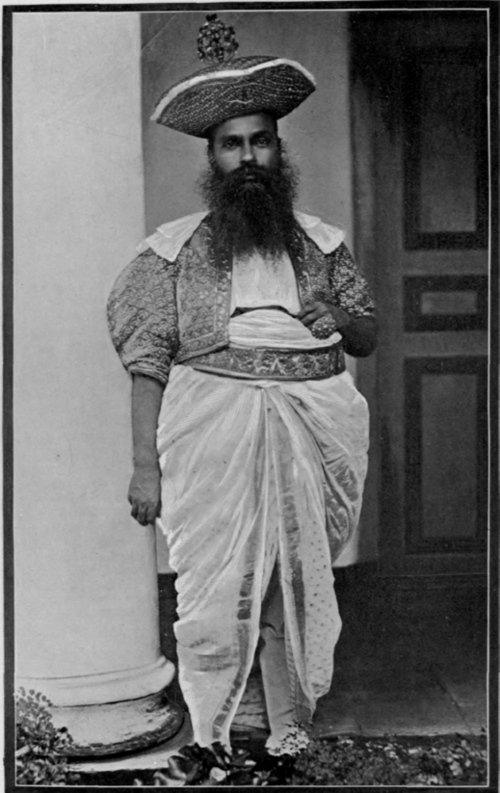
A Former Ruler.
The origin of this place of Hindu worship is lost in obscurity, but there seems to be little doubt that it is at least seven centuries old, and some of India's excavated shrines, the majority of which belong to the Buddhist faith, are believed to antedate the Christian era. To one who has seen the temples and tombs of Egypt, the resemblance between these structures is extraordinary; and it is possible that the idea was borrowed by the inhabitants of India from the dwellers in the valley of the Nile. At all events, it is not strange that this style of architecture became popular in India, for although involving immense labor, such temples cannot be destroyed by fire, nor will they crumble away with age, and in this torrid climate the temperature in such caves is always cool, since the fierce solar rays are totally excluded. Though mutilated, they have at least survived the terrible violence of religious hatred, which again and again, under the names of Buddhism, Brahminism, and Mohammedanism, entirely destroyed most of the ancient temples in the north of India. The shrines of southern India were more fortunate, and although a little more difficult of access, will repay a visit, if only to remind one, by their wonderful dimensions and elaborate carving, of the old vanished shrines of Delhi and Benares.
A Hindu Dancing Girl.

Conveyances In India.
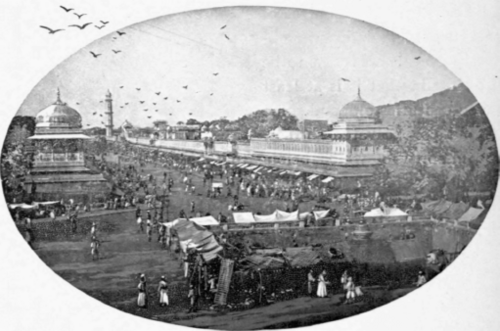
Market-Place, Jeypore.
From Bombay we journeyed northward to the still more picturesque and Asiatic city of Jeypore. On entering its principal square, I at once exclaimed: "This is, at last, the India of my imagination; not Anglicized by foreign associations, like Bombay, but a bright, animated picture of the Orient, gleaming with all the colors of the rainbow, both in dress and architecture, and thronged with an astonishing variety of races, costumes, and complexions."
We lingered for an hour in the busy market-place, absorbing, with the keenest interest, the gay and novel sights around us; and yet so rapidly did they pour in upon this stage from north, south, east, and west, that no one brain or if they could, "What have you in the Occident to equal this?" On the roofs of many of the neighboring buildings sat wild peacocks, resembling sculptured birds of paradise; and amid curious Oriental vehicles, Arabian horses frequently pranced by, ridden by officers of the Maharajah.

But most astonishing of all were the huge elephants, which frequently appeared with loads of people on their backs, as naturally as London omnibuses. It seemed as if a part of Barnums "Greatest Show on Earth"had suddenly broken loose. Some of these animals were as large as Jumbo, others were tattooed in various colors, and not a few were gorgeously caparisoned with gold and velvet.
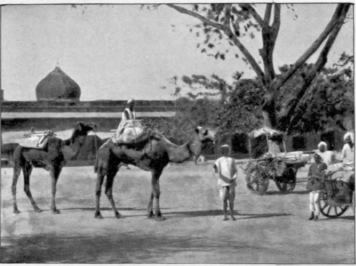
A Scene In Jeypore.
Continue to:


My Books

