


India II. Part 12
Description
This section is from the book "India - John L. Stoddard's Lectures", by John L. Stoddard. Also available from Amazon: John L. Stoddard's Lectures 13 Volume Set.
India II. Part 12
Accordingly, the next morning, having given up their weapons, all the survivors, including the wounded and the children, left the area where they had endured such misery, and started for the river, along a path where there now stands a fine memorial church erected in their honor. Nana, upon whose promise they were thus relying, cannot be classed with any Zulu chief or North American Indian. He was a native prince, - the owner of a splendid palace. Some of the ladies then tottering toward the river, more dead than alive, had danced at balls given at his residence. The officers, too, had drunk champagne with him and thought him a most courteous fellow - for an Indian. The reason for Nana's treachery is plain. His father, when dethroned by England like so many other Indian princes, had been richly pensioned. Upon his death, Nana demanded the continuance of the pension. The British Government refused. Thenceforth, beneath that prince's suave and elegant manners lurked a thirst for vengeance. No one suspected him - he was so hospitable, so refined! been sent to the Crimea to study the art of war.

The Field At Cawnpore.
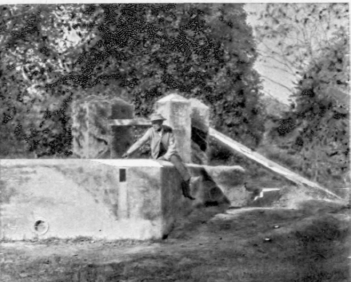
The Well.

A Village Street.

A Princess.
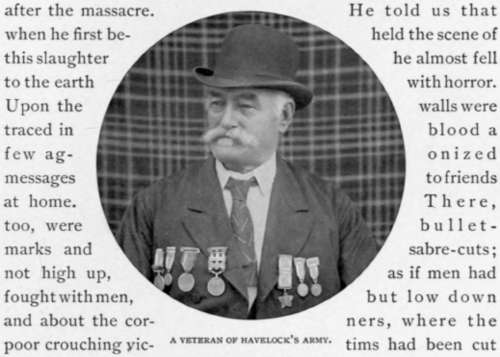
Beside the river is a stairway known as the "Staircase of the Massa-cre." Down these steps the prisoners made their way with hope and joy. The boats were there. "Surely," they thought, "there is no treachery: Nana has kept his word." While the women and children gladly went on board, on one side of the staircase stood the Englishmen; upon the other, Nana and his officers. Suddenly Nana raised his sword. It was the signal for the butchery. At once a battery, till then concealed, poured on the wretched prisoners a storm of grape-shot. Sir Hugh fell dead at once. Only four wounded men, by feigning death and floating down the stream, succeeded in escaping. The women and children, however - then a company of widows and orphans - were brought on shore, reserved for a more dreadful fate. Filled with unutterable horror, they must have envied then their husbands, fathers, and brothers, who had been killed before their eyes. A beautiful memorial park now occupies the place to which they were conducted. Here, for three weeks, in the appalling heat of India in July, two hundred and six European ladies and children were pent up in two stifling rooms. Upon the women the natives inflicted such insults as they liked, for they well knew that nothing would so lacerate English hearts as brutal treatment of their women. But when the troops of General Havelock were reported to be near, Nana ordered all these prisoners to be brought out and shot. In an agony of dread, the women clung to each other so closely that it was impossible to separate them. Accordingly, the butchers finally rushed in upon them with drawn swords and bayonets, and amid heart-rending shrieks and piteous prayers the deed was done. There is in Cawnpore now a soldier who was one of the army of General Havelock, and who arrived here just four hours to pieces. Saddest of all, scattered upon the blood-smeared floor, were locks of golden hair and little children's shoes and playthings. The sight of these things drove the English troops to madness, and bearded men who had beheld, unmoved, the horrors of a hundred battles, sat down and wept in sickening anguish; then rose again, steeled evermore against a cry for mercy!

The Memorial Church.
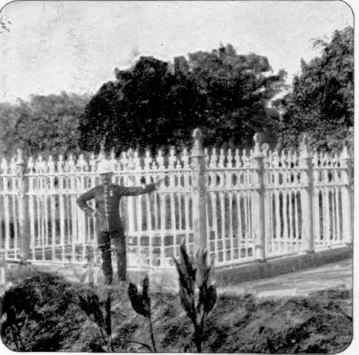
The Grave Of Many Heroes, Cawnpore.
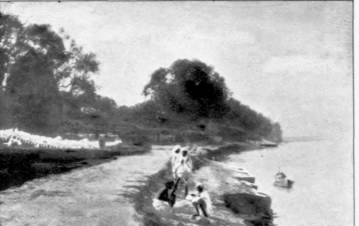
Near The Steps Of Slaughter.
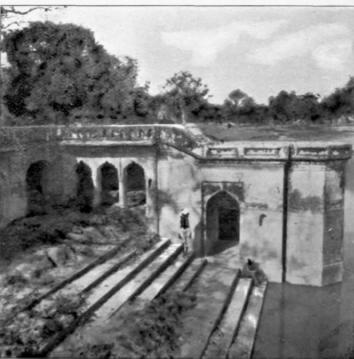
The Staircase Of The Massacre.
In the memorial park, surrounded by a beautifully sculptured screen, is the historic well, whither, on seeing the natives coming toward them, ten English women rushed, and, without hesitation, first threw their children in and then leaped in themselves. Into this abyss the mutilated remains of those who had been massacred were also subsequently thrown, near this spot were cruelly massacred by the followers of the rebel Nana, and cast, the dying with the dead, into the well below, on the 15th day of July, 1857."
Continue to:


My Books

