


TACOMA 1864
Description
This page of the book is from "The New Student's Reference Work: Volume 4" by Chandler B. Beach, Frank Morton McMurry and others.
TACOMA
1864
TAFT
His account of Tiberius is manifestly unjust, being steeped in the prejudices of the Roman aristocracy and drawn from a poisoned source. He died, it is thought, ;n 120 A. D. Tacoma (tá-kō'ma), Wash., county-seat of Pierce County, is on Puget Sound at the head of navigation. The sound, which is from three to five miles wide, narrows near Tacoma to an inlet known as Commencement Bay, less than a mile wide but five long. The city is built on a bluff 200 feet high, overlooking the sound and the Cascade range, with the snowy peaks of Mt. Rainer, also known as Mt. Tacoma. in the distance. The city was laid out by the Tacoma Land Company, an organization by the managers of the Northern Pacific Railroad, which in 1873 bought 16,000 acres near the little village of Rainier, that consisted of one sawmill and the houses of its workmen. They made it the terminus of their road and built two hotels, the second costing $750,000. The salmon-fisheries of Puget Sound, the hop-fields in Puyallup Valley, the great forests of white pine and cedar on the neighboring mountains and the coal, iron and other minerals of the region furnish the materials of the large trade of the city. Regular transport-service has been established between Tacoma and London, trains laden with hops meeting the steamers at New York, arid its harbor is a starting-point of steamers for Alaska. The works of the Tacoma Lumber Company cover 80 acres in the city, and it 'owns 150,000 acres of timber-land and 5,000 of coal-land. More than 40 establishments are engaged in the manufacture of lumber and other products of wood-working factories. The lumber and other products are loaded at the wharves for China, Japan and Australia. There also are large smelt-ing-works and wheat elevators, rolling-mills, car-shops, flour-mills, iron-foundries, smelters, a large private dry-dock, meat-packing establishments and the most extensive fisheries-plant in the United States. Tacoma has ten banks and one foreign branch-bank (London). The public-school system includes a high school, with manual-training department and grade-schools, numbering 29, while the cost of maintaining the schools is $245,000 annually Tacoma also is the seat of Puget Sound University (M. E.), Washington College, Annie Wright Seminary (Episcopal), Academy of the Visitation (R. C), the Y. M. C. A's. evening-institute and other institutions. There are fine public buildings, a free library and an ethnological and historical museum. The Great Northern, Northern Pacific and Tacoma Eastern railways serve the city. The following roads are building into it : The Union Pacific, Southern Pacific, Chicago, Milwaukee and St. Paul, Canadian Pacific, Chicago and Northwestern, North Coast, Portland and Seattle and Port
Townsend Southern. Population (1910),
83,743-
Taft, Lora'do, American sculptor, was born at Elmwood, 111., April 29, 18Ŏ0, and graduated at the University of Illinois and at Ecole des Beaux Arts, Paris. In 1886 he settled in Chicago, and became instructor in its Art Institute and lecturer on art at the University-Extension-Department of the University of Chicago. He has produced many busts and ideal subjects, and among other fine decorative work of his was that of the horticultural building of the Columbian exposition. The symbolic beauty and fine workmanship of these decorations won great praise. Among his many works are a bust of Schuyler Colfax in Indianapolis, a statue of General Grant and the fine reliefs for the Michigan regimental monuments on the field of Gettysburg. Mr. Taft is a member of the American Sculpture Society and of the Western Society of Artists.
Taft, William Howard, twenty-sixth president of the United States, was born at Cincinnati, O., Sept. 15, 1857. He graduated
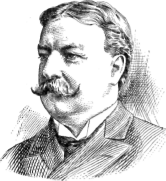
WILLIAM HOWARD TAFT
from Yale College in 1878, being salutatorian in a class of 150 men. Two years later he began to practice law in Cincinnati, reporting law-cases for the local journals and becoming assistant prosecuting-attorney for the county (1881-2). During 1887-90 he was a judge in the Cincinnati superior court; in 1890-2 solicitor-general of the United States; and from 1892 to 1900 judge in the Federal circuit-court, receiving the LL.D. from Yale (1896) and becoming dean of Cincinnati Law-School (1898). In 1900 he was made president of the commission to set up civil government in the Philippines, and next year he became the first civil governor. lie not only established civil government, with courts, health department, postoffices, public schools and civil-service, but he settled the problem of the friars and their lands and achieved important results in conciliating the Filipinos, Aguinaldo taking the oath of allegiance to


My Books

