


JN.KERMAN, BATTLE OF 927 INNOCENT XI
Description
This page of the book is from "The New Student's Reference Work: Volume 2" by Chandler B. Beach, Frank Morton McMurry and others.
JN.KERMAN, BATTLE OF
927
INNOCENT XI
in the main are solutions of the aniline dyes. Sympathetic inks leave no trace of color upon the paper, but when exposed to heat or to chemical action of some kind become more or less distinct. Dilute sulphuric acid makes a sympathetic ink that is developed by heating. Printing ink is a greasy or oily compound, very different in appearance and composition from writing ink. There are three qualities: newspaper inks, lithographic inks and book-work inks. For the common newspaper ink oils made from paraffine or resin are used, mixed with ordinary lampblack. In the book-work inks an expensive drying oil is used; and in lithographic work both writing and printing inks are used, though prepared in a special way.
Ink'ertnan, Battle of, occurred in 1854 at the small Tartar village of the same name, in the Crimea. It is situated near the eastern extremity of the harbor of Sebastopol. The battle took place, during the Crimean War, between 60,000 Russians and 14,000 allied English and French forces. About six o'clock in the morning of Nov. 5, the Russians marched out, their movement being concealed by darkness and a drizzling rain. Suddenly they appeared crowding upon the slopes of the plateau upon which were posted the opposing forces. Only a handful of men, 1,400, made a heroic stand for six hours against overwhelming odds, when re-enforcements drove the Russians defeated from the field. See Kinglake's History of the Crimean War.
In'man, Henry, an eminent American painter, was born in Oct., i8oi,atUtica, New York. He became a pupil of Jarvis, and early excelled in miniature painting. His genius was broad, extending to portraits, landscape and historical subjects. Among his best works are Rip Van Winkle Awaking from His Dream, Mumble Peg, The Boyhood of Washington and portraits of "Wirt, Audubon, Van Buren and Seward. He died at New York, Jan. 17, 1846.
Inn'ess, George, an American painter, was born at Newburg, N. Y., May 1, 1825. He began landscape - painting at 21 in New York city, and later went to Europe, residing in Italy for a considerable period. Returning to America about 1868, he lived in New York until 1 8 7 1 , when he again went to Italy, where he lived until 1875. He became a mem-
ber of the National Academy in 1868, and at the Paris Exposition of 1889 received a third-class medal. After his death, which occurred at the Bridge of Allan, Scotland, Aug. 3, 1894, 240 of his pictures were sold at auction for $108,670. He ranks as one of the best of the American landscape-painters.
In'nocent, the name of 13 popes, the most remarkable being:
Innocent I, a native of Albano, who was elected bishop of Rome in 402 A. D. His rule is one of the most important and ener-
fetic in the history of the Roman church, le condemned heretics, sent legates to represent the church in distant countries, insisted on the rights of the bishop of Rome to receive and judge cases appealed to him, and enforced with the clergy the prohibition of marriage. He died in 417, and was put on the list of saints. St. Innocent's Day is July 28.
Innocent III (G. Lothario Conti) is esteemed the greatest pope of this name and one of the very greatest among all the popes. He was born at Anagni, Italy, in 1161. His school training was received at Paris, at Bologna and at Rome, where he was made cardinal. In 1198, at the early age of 37, he was elected the successor of Pope Celestine III. He then was in the full vigor of manhood — his mind filled with lofty purposes and ambitions. He believed that to the successors of St. Peter Christ had given power not only over the church but over the world. The crowns of kings and the destinies of nations were to be placed in the hands of the popes. Almost every state was brought under his power, Italy, France, Spain, England and Germany, through their rulers, obeying his dictates. It was at his call that the crusade against the Albigenses was begun. He was a careful guardian of public and private morality; a protector of the weak; and zealous to suppress evils of all kinds in society. All the force of his power and influence was given to founding the great Franciscan and Dominican orders of monks. In 1216 he died at Perugia at the age of 56. His character has been spoken of by historians as "high and blameless, wise and gentle." See Latin Christianity by Mil-man and History of the Popes by Ranke.
Innocent XI (Benedetto Odescalchi) was born at Como. Italy, in 1611, and elected pope in 1Ŏ76. He was distinguished for learning and for nobility and force of character. His historical renown is mainly owing to his contest with Louis XIV of France. A dispute arose about the right of the king to keep bishops from their charges and to retain the revenue from the vacancies thus caused. The pope gave notice that he would not receive the credentials of any new ambassador at his court who would not renounce this claim. Louis resisted this decree and sent a large body of military and naval officers to
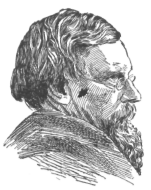
GEORGE INNESS


My Books

