


Glue And Sandpaper. Continued
Description
This section is from the book "Elements Of Woodwork", by Charles A. King. Also available from Amazon: Elements Of Woodwork.
Glue And Sandpaper. Continued
(E.) The glue should be spread rapidly and evenly with a brush of suitable size, - a large one for broad surfaces and a small one for small work. Glue should not be thrown about wastefully; enough should be used to cover the surface completely but not thickly.
(F.) In using handscrews, it is of the greatest impor tance that the jaws be kept parallel as described in Topic 59; care must be used that more strain is not placed upon the handscrews and clamps than is necessary to bring the joint together.
(G.) Cold or liquid glue has supplanted hot glue in furniture repairing, gluing up intricate work, and in places where it is impracticable to use hot glue either on account of its setting too rapidly, or where heat is not available. Liquid glue does not hold as well nor as permanently as hot glue when properly used, but for many kinds of work it is perfectly satisfactory.
(H.) In gluing rosewood, or other woods of a greasy nature, the glue should be thinned with vinegar, which will cut the grease. Another method of making glue hold on wood of this sort is to chalk both members of the joint thoroughly, and let it stand for two or three hours, when it should be wiped off. This absorbs the grease on the surface of the wood, which allows the glue to take hold. In all gluing, do not allow the bare hand to touch the joint any more than necessary, as the grease and perspiration will prevent the best results from being obtained.
67. The testing of sandpaper. - (A.) Sandpaper is made by covering paper with a thin layer of glue, over which is spread evenly a layer of ground flint or glass; over this is spread another coating of glue, which firmly fastens the sand to the paper.
(B.) In buying sandpaper, pass the finger over it to see if the sand is firmly fastened. Be sure that the paper is neither flimsy nor brittle. Coarse particles of sand are sometimes found upon sandpaper which renders it worth less; these can be detected only by use, unless they are very prominent.
68. How to use sandpaper. - (A.) Sandpaper is made in numbers, 00, 0, J, 1, 11/2, 2, 21/2, 3. Numbers 00 and 0 are very fine, and are used in rubbing down shellac and varnish. Numbers 1/2 and 1 are used in sandpapering mahogany and other fancy woods, and number 11/2 is used upon all building finish but the finest; the coarser num bers are used upon floors, outside finish, and other coarse work which is to be painted, though for a very nice floor, 11/2 is used, rarely anything finer. It is a fallacy to think that the finer the sandpaper used, the finer the job will be, since upon some kinds of woods fine sandpaper will make a glassy surface in spots which will not take the finish like the rest of the work. Sandpapering is as apt to detract from the work as it is to improve it, for unless used very skillfully, the character of angles and small surfaces will be changed, though it may seem that the damage is so slight as to be imperceptible. In using sandpaper, the workman should guard against rounding off square corners or de stroying the form of surfaces; a raw corner, however, should be removed with a few light, careful strokes, as a perfectly sharp corner will always be more or less ragged.
The one who knows will always notice the omissions of details of this sort, and will attribute such imperfections to lack of skill or knowledge on the part of the workman. It is for the one who knows, that all work should be done - not for the casual observer - and these apparently insignificant details, rather than the part of the work which may seem of more importance, form the basis by which one workman judges the work of another. In nothing do small things count more than in making or destroying a workman's reputation.
(B.) Keep the sandpaper dry, and stored in a dry place, as moisture softens the glue so that the sand may be easily rubbed off. In handling sandpaper, care should be taken that the sanded sides are not rubbed together.
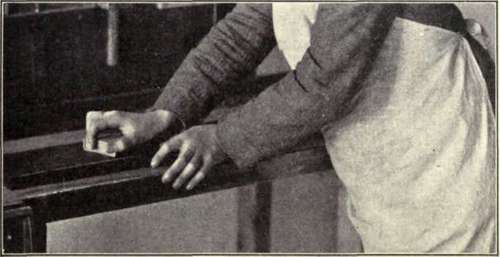
Fig. 97. - Use of Sandpaper upon a Broad Surface.
(C.) In preparing to sandpaper a flat surface, or for general work, a sheet of sandpaper should be torn in halves the short way of the paper, and one half should be folded back to back, and held (not tacked) around the block with the hand, as in Fig. 97. The act of grasping the block for the work will hold the sandpaper, and any device for holding the sandpaper on the block is worthless, being considered by the workman as a mark of the novice. The block should be about 3" x 4" x J", and may be made of wood, cork, fiber, or any material which suits the taste of the workman.
If there is much sandpapering of moldings to be done, it is best to make blocks which will fit the contour of them, as it is very hard on the hands to do this work for very long at a time, though nothing has ever been invented which fits irregular forms as well as the fingers. A piece of sandpaper should never be used on a piece of work until all the cutting by edge tools has been done, as the particles of sand will enter the grain of the wood, and any edge tools used upon it afterward will be quickly dulled. Do not use a piece of sandpaper so large that any part of it will not be under perfect control, as loose ends will scratch the wood, and it has an awkward and unworkmanlike appear ance. Always work parallel with the grain, and be sure that all plane marks and rough places are thoroughly rubbed down. In order to do this well, it is often necessary to use considerable muscle. This part of the work calls for good judgment, for unless sandpapered enough, there will be places which will show when the finish is spread on the work, though they may have been invisible before. No one can tell as well as the workman himself when suffi cient sandpapering has been done, though it may be evi dent to any one who knows the signs whether or not the work has been done judiciously. Upon a coarse job it is usually allowable, and sometimes desirable, to sandpaper across the grain, especially if the work is to be painted.
In order to impress it upon the student, we will repeat that too much care cannot be taken in the use of sandpaper, for much oftener will an amateur injure a piece of work than improve it.
(D.) In sandpapering panel work, as in Fig. 98, the panels (a) should be smoothed, scraped, and sandpapered, and the edges of the stiles (b), rails (d), and muntins (e) should be treated the same way before the panel work is put together; an exception to this in regard to the panels may be made if the panel frame is constructed in such a way as to allow the panels to be put in place after it is together, in which case the panels may be smoothed at any time. Upon very fine work the panels are sometimes polished before being put in place, as it is difficult for the finisher to work into the corners after the panels are in place. After the faces of the stiles, rails, and muntins have been planed and scraped, they should be sandpapered in the order named, working with the sandpaper over a sharp-cornered block close to the edges of the pieces, being careful not to drag the paper over the face of the pieces which join at right angles. The stiles, rails, and muntins should be sandpapered in the order in which they are mentioned. If the sandpaper runs over the rails a little when sandpapering the muntins, or over the stiles when sanding the rails, it will do no harm, as a couple of light, careful strokes parallel with the grain will be sufficient to remove any scratches which may be made.
In sanding mahogany, or any wood of which the grain rubs up, make the strokes in one direction only, instead of back and forth. Sometimes wax is rubbed in to hold the grain down upon cheap work, but this is not recom mended, as that place will not take the stain or the finish like the rest of the wood. A very thin coat of shellac is used for the same purpose; this is less objectionable, but should be avoided if possible.
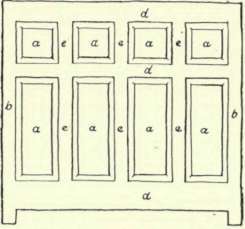
Fig. 98 - Sandpapering Panel Work. (For explanation, see text.)
Suggestive Exercises
65. Of what material is glue made? Describe briefly the process of making glue. What kind of glue is best for general work? Is ground glue always reliable? What is the chief advantage in its use? Is high-priced glue always the best for all purposes? What should be the appearance of good glue? How should it act in cold water? When cut with a knife? When broken? Compare the amount of water absorbed by a good and a poor glue. How should a glue pot be con structed? What will be the result if the glue pot boils dry? Describe brushes suitable for use in gluing. What kind of bark makes a good brush for small work? How is it prepared for use?
66. Describe the condition of glue when ready for use. What tool is used to increase the strength of the joint? In preparing for gluing, what preparations should be made? How should wood be treated for use in gluing up wood of a greasy nature?
67. Describe the manufacture of sandpaper. What is used for sand ? How select sandpaper?
68. For what kind of work is sandpaper numbers 00 and 0 used? Numbers 1/2 and 1? What number of sandpaper is used upon general work? What will be the result if sandpaper is kept in a damp place, or becomes wet? What should be the size of the piece of sandpaper used upon flat surfaces, and for general work? How should moldings be sandpapered? What should be guarded against in working around sharp corners? Should sandpaper be carried with or across the grain ? What exceptions? How should panel work be sandpapered? How should panels and the edges of stiles, rails, and muntins be treated before gluing up? How should sandpaper be used upon grain which rubs up? How are panels sometimes treated upon fine work? Why?
Continue to:


My Books

