


Jacobean Period. 1603-1688. Part 11
Description
This section is from the book "The Practical Book Of Period Furniture", by Harold Donaldson Eberlein And Abbot McClure. Also available from Amazon: The Practical Book Of Period Furniture.
Jacobean Period. 1603-1688. Part 11
Structure
In structure Jacobean furniture, even to the end of the Carolean epoch, was extremely simple and straightforward. However much the types and processes of decoration may have been affected by Continental influences, the subtleties of the foreign joiners did not gain an appreciable hold in England till a later date. Strength and staunchness of carcase were the objects aimed at rather than grace of contour. Heavy rails and stiles or posts were mortised and tenoned and pinned together with wooden pins. Legs were firmly braced with heavy stretchers (Figs. 1, 4 and 5) close to the ground. Neither serpentine, bowed nor bombe fronts had as yet come into English cabinet work and carcases followed rectangular principles. In arm chairs the front legs were carried up above the seat to form supporting posts (Key I, 1) for the arms. In side chairs the seat rails were tenoned into the legs until a weaker principle of construction began in late Carolean days (Fig. 3, b), in which the leg is socketed into the seat frame.
In old drawers the "runners" are mostly formed of broad grooves in the sides of the drawers themselves, a corresponding flange of wood being fixed in the interior surface of the chest for them to bear upon.
Cromwellian carcase work remained much the same except that the carved ornamentation was not so lavish as it had been during the reigns of James and Charles.
The bedsteads were ponderous structures consisting of pillars supporting a carved and panelled tester, while the bedstead proper, on which the mattress rested, was detached from everything except the headboard, having plain square legs of its own (Plate I, p. 32).
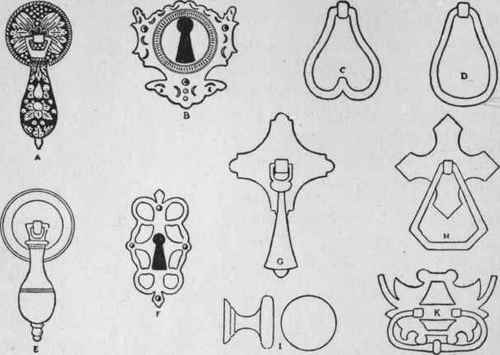
Fig. 16. Characteristic mounts of the Jacobean period.
Mounts
The mounts of Jacobean furniture were not conspicuous. Scutcheons of iron or brass for keyholes were for the most part either very modest or lacking altogether. Sometimes a metal V-shaped flange was placed under the keyhole of chests as a guide for the key in a dark muniment room. In the later Carolean times, when the refinements of the Continental cabinet makers were more appreciated, we find gracefully shaped brass scutcheons either chased or fretted (Fig. 16, B and F).
The handles of drawers and cabinet doors in the earlier part of the period were simple knobs of either wood or metal (Fig. 16, I) or else - and, these a little later - drop loops (Fig. 16, C and D). With Carolean refinements came pendent drops of brass (Fig. 16, E and G), sometimes hanging from chased or fretted mounts (Fig. 16, A). Drop loops continued in use also as well as plain knobs.
The early hinges were modest iron strap affairs or else concealed. Even the more ornate Carolean hinges, embossed occasionally with circular scallops or deftly fretted, were at the most not particularly elaborate. It was but rarely that conspicuous hinges were seen before a later date.
Finish
Much of the early Jacobean furniture was quite innocent of surface finish. In other cases the wood was given a dressing with either oil or wax. Sometimes also a kind of varnish was used made by dissolving gum copal in boiling oil.
The usual finish was, first, an application of oil, generally nut or poppy, to "feed" the wood, and, second, a coating of beeswax mixed with a little turpentine sufficient to make a thick paste.
After allowing the oil to dry in for some hours or, better still, for a day, the surface of the wood was wiped off, removing thoroughly all the oil "sweat," in other words that portion of the oil not absorbed by the wood. The wax was then applied and the surface thoroughly rubbed and polished with a woollen rag.
The persistence and accuracy of tradition in England are proverbial, and it is interesting to note in this connexion that a friend of the authors', whose father was given a fine old carved oak chest by a Somersetshire yeoman out of gratitude for some small legal services, asked the donor, then a very old man, how he had kept the chest in such excellent condition. His reply was that his father and grandfather had always bidden them "feed the oak with oil and polish it with wax."
When wax only was used, as appears to have sometimes been the case, the pithy portions of surface were dark and the grain light. Where oil was applied, the reverse effect was produced.
For modern oak in finishing or refinishing oak, linseed oil is largely used.
Continue to:


My Books

