


The Seventeenth Century Before The Accession Of Louis XIV. Part 2
Description
This section is from the book "French Furniture", by Andre Saglio. Also available from Amazon: French Furniture.
The Seventeenth Century Before The Accession Of Louis XIV. Part 2
It is supposed to have belonged to Maria Gonzaga, Queen of Poland, and is of very complicated structure, so overladen with all manner of ornamentation, inlaid and applique in metal and other materials, that it is really less like a work of art than a masterpiece in the sense understood by municipal juries - that is to say, an accumulation of tricks of various trades. It is easy to imagine what kind of technical lessons such pieces of work would give to the artisans of other countries ! The French got from it not only the idea to which we have already referred of using gilded bronze, but also of inlaying gold and silver in iron - a process known as damascening, such as was employed, for instance, in a large pier-glass in the South Kensington Museum.

Plate XXVI. ARMCHAIR. Epoch Louis XIII. Cluny Museum.
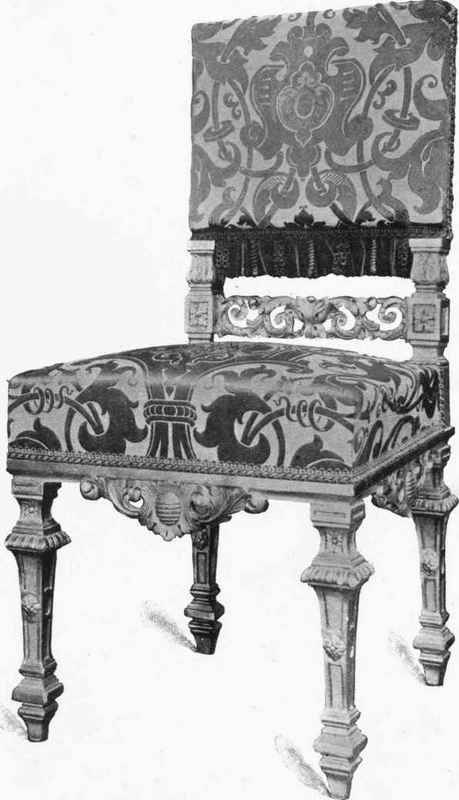
Plate XXVII. CHAIR. Epoch Louis XIII. Palace of Elysee.

Plate XXVIII. EBONY CHEST. Epoch Louis XIII. Palace of Fontainebleau.
Spain, which ever since the fifteenth century had supplied France with quantities of the painted and gilded leather hangings for rooms known as guadamacillas, now began to export also numerous cabinets, that can easily be identified by their cubic shape and the open-work metal plaques with which they were decorated in accordance with Moorish traditions. These pieces of furniture, of which the best existing examples are at South Kensington, were formerly known as var-guenos, for the chief place of manufacture was Varguo, in the province of Toledo. Inlaid wood, ivory, or painted bone are the only decorations employed. These cabinets do not really seem to have had any direct share in the evolution of the Louis XIV. style, in spite of the favour they enjoyed for a time. It was, indeed, rather through their tributary province of Flanders, which had, however, already been brought under Italian influence, that Spanish craftsmen produced any effect upon those of France. Moreover, the exports from Portugal on the other side of the Pyrenees were looked upon as costly curiosities rather than models to be imitated; the variety of choice woods brought to Lisbon for the manufacture of furniture, the suitability of Asiatic materials, such as tortoiseshell and mother-of-pearl, for inlaid work, were, of course, at first extremely attractive to Italian craftsmen, enamoured as they were of the mosaic marquetry, known as tarsia, and it is possible that it was through these latter that a few indications of the Portuguese style may have become incorporated in that which we are about to study.
Cabinets of German fabrication were celebrated in Europe in the first years of the seventeenth century. We have already noted how the municipality of Paris, rich though it was in good craftsmen of its own, chose to purchase a famous German piece of furniture for a ceremonial gift. The merit of these works did not, however, consist in the originality of their structure, which was simply copied from the Italian style, nor in the novelty of the processes of decoration employed, for the use of amber in certain examples was the only innovation, but in the minute and scrupulous care with which every detail was executed. This unwearying patience, alike the distinctive merit and defect of the Teutonic character, which makes Germany the home par excellence of archaeologists and theoretical philosophers, is displayed in the enormous output of work by an immense number of craftsmen, working chiefly at Nuremberg and Augsburg. In 1616 the ebenist Ulrich Baumgarter was commanded by the Duke of Pomerania to make a cabinet which it took him five years to produce - with the aid of the architect-painter Philippe Hainofer, and three other painters, a sculptor, an enamellist, six jewellers, two clock-makers, an organ-maker, a mechanician, a modeller in wax, a specialist in making cabinets, an engraver in metal, a chaser of precious stones, a turner, a binder, two scabbard-makers, and two locksmiths.
The work is now in the Museum of Industrial Art at Berlin; the execution is perfect, but no one will be surprised when we add that it is also too complicated aud heavy, and as a whole far from artistic. Our only reason for dwelling on it at length is to give an idea of the technical and intellectual characteristics contributed to the revival of the French school by the numerous German craftsmen who crossed the Rhine.
Holland, especially what were then its Flemish provinces, sent to France very nearly as many skilled craftsmen as Germany. Prosperity had returned to the districts long terrorised by the government of the Duke of Alva, and Antwerp became the headquarters of the manufactures of the country. In many cases it was impossible to distinguish between the works exported from the North and those produced in the South, so great was the skill with which Flemish artisans assimilated Italian processes. It was, however, of course impossible for a land owning so many artists of talent - indeed of genius, for Rubens was then flourishing - to be content with plagiarisms of foreign designs for furniture. As a matter of fact, we find in cabinets executed under the influence of such men as De Vriendt, surnamed Floris, the Francks, the Breughels, and De Vos not only mosaics in the Florentine style, and decorations copied from Correggio's designs, but paintings by native artists, marquetry, in which the tulip, cultivated with such loving care in the North, is the prevailing motive, and lastly, representations engraved in ebony of contemporaries of the craftsmen.
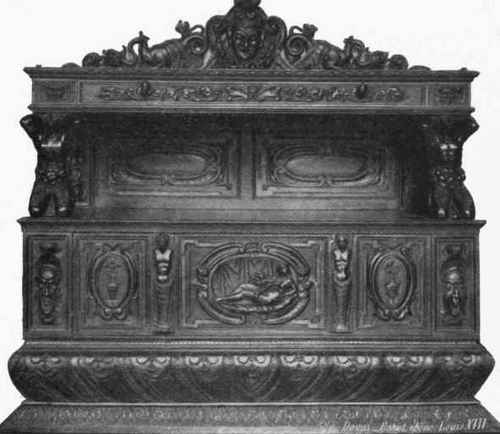
Plate XXIX. EBONY CHEST. Beginning of XVII Century. Cluny Museum.
Continue to:


My Books

