


IX. Tables. Part 2
Description
This section is from the book "Colonial Furniture In America", by Luke Vincent Lockwood. Also available from Amazon: Colonial Furniture In America.
IX. Tables. Part 2
Another early American table is shown in Figure 676 and is the property of the writer. The table is made of Virginia walnut throughout, and the top is seven feet one inch long, being held in place on the frame with large turned pins. There are two long drawers and a small one at the centre, all on one side. The legs are turned in the vase, ring, and bulb pattern, and there are heavy stretchers across the ends and through the centre. It is rather difficult to determine just what such tables as this were used for. It suggests those shown in the preceding figures, and the long overhang at the two ends and the underbracing passing through the centre would rather indicate that the table was intended to sit at. It is possible that it was a form of dining-table used contemporaneously with the gate-leg tables. A number of these tables have been found, usually not so large as this one, and occasionally they have underbracing on the sides between the legs. It is possible that this table may have been used for a writing or library table, although it would seem rather large to be used for that purpose. It has also been thought by some that these turned tables were intended to be used as sideboard tables. They are, however, a little low for that purpose, as tables intended for sideboards are usually three or four inches taller than this one.
The form of table most popular in this country during the last half of the seventeenth century was the gate-leg table, so-called because of its construction with one or more gates which swing out from the two sides of the frame to hold the hinged leaves. This style of table is found in many sizes, and when large was the dining-table of the period following the style of dining-table shown in Figure 675. These tables, whether large or small, almost invariably had a drawer at either end. They were commonly made in two ways, one style having six feet touching the floor, and the other having two extra feet below the inner leg of the gate, making eight legs. The frames were made narrow, so that when the leaves were down the table would occupy a comparatively small space. The inner edges of the leaves were usually finished in one of three ways. The more common method was to finish the edges of the top with a quarter-round and the contiguous edges of the leaves with a cove, thus By this method, when the leaves are down the hinges are concealed. The second method was to finish the edges of the top with a groove and the contiguous edges of the leaves with a small torus, thus The third method was to finish the edges straight, except for two separate short tenons on each leaf which fitted into two corresponding mortises cut into the edges of the top.

Figure 675. Oak Drawing-Table, early seventeenth century.

Walnut Turned Table, about 1700.
Figure 677 shows a large gate-leg table preserved at Pilgrim Hall, Plymouth, and tradition states that it was used by Governor Edward Winslow in his council chamber. The turnings are of an early pattern and the single gate seems almost too light to hold the large leaf. There are eight feet reaching the floor.
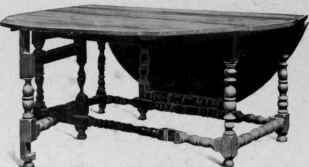
Figure 677. Gate-Legged Table, first half seventeenth century.
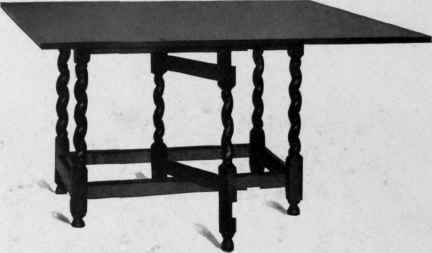
Figure 678. Gate-Legged Table, about 1650.
A number of medium-sized tables of this sort are found with square tops, and it is probable that they were intended to be used together to form a long dining-table.
Figure 678 shows a gate-leg table with but a single leaf. On the under side of the top were found iron bolts which indicate that it was one of two or three tables intended to be joined to form a long table. It is made of walnut, as were many of the gate tables, and the legs are spiral-turned with plain underbracing. This table is the property of the writer.
Figure 679 shows a very good gate-leg table, having the six feet and two gates, which belongs to Mr. Dwight M. Prouty, of Boston. The turnings are all in the knob pattern, which is uncommon on this form of table.

Figure 679. Gate-Legged Table, third quarter seventeenth century.

Figure 680. Double Gate-Legged Table, last quarter seventeenth century.
A rare form of gate-leg table is shown in Figure 680 and is from the Bolles Collection. It is very large, and the massive leaves are supported by double gates which swing out from the centre, making twelve legs extending to the floor. It is made of walnut and the turning is in the vase-and-ring pattern. The drawers are missing but were on bottom runners. Very few of these double-gate tables are known. They are generally made of walnut or maple.
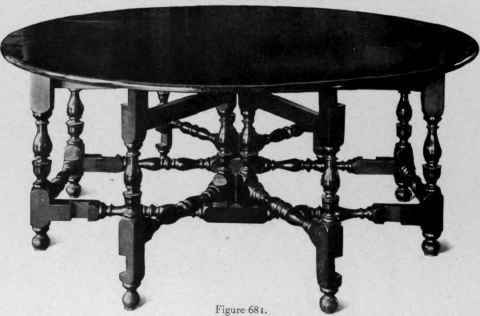
Double Gate-Legged Table, last quarter seventeenth century.
Another double-gate table of walnut is shown in Figure 681 and is in the rooms of the Albany Historical Society. It is about the same size as the one last shown, but differs in that the two gates are pivoted at the centre, whereas in the preceding figure they are pivoted at the ends. This form of construction is more graceful as well as more practical, because the legs do not interfere so much with the sitters. The inner legs of the gates do not extend to the floor, consequently the piece stands on but eight feet instead of twelve, as in the preceding figure.
Continue to:


My Books

