


IV. Cupboards And Sideboards
Description
This section is from the book "Colonial Furniture In America", by Luke Vincent Lockwood. Also available from Amazon: Colonial Furniture In America.
IV. Cupboards And Sideboards
AT the time when the American colonies were settled, cupboards had been in common use for generations. As the name implies, they were originally "bordes" on which to set drinking-cups. The earliest of these cupboards now known are constructed with shelves arranged like steps, and having often a "tremor" or canopy of wood; they are Gothic in style, and are spoken of sometimes as ambries or almeries, the names long used in the churches for a niche or cupboard near the altar, built to contain the utensils requisite for conducting worship.
The frequent mention of cupboards of all kinds throughout our probate records shows them to have been in very common use in all the colonies, and the spelling of the word is various enough to suit all tastes: cubboard, cubberd, cubbord, cubbert, cupbard, and cubart are some of the spellings employed. Court, wainscot, livery, standing, hanging, press, joined, plain, great, and painted are the descriptions most often met with. Court and livery, the words most often used in connection with the cupboards of New England and the South, seem to have lost their original meanings sometime before their use in this country. It is fair to suppose that they must have had some definite descriptive meanings when first applied, and these seem to have been derived from the French words court and livrer, court meaning low or short, and pointing to the conclusion that this must have been a low piece of furniture much like a modern serving-table. Livrer has been variously translated to mean service and delivery, perhaps referring to a custom in vogue during the fifteenth and sixteenth centuries of delivering to the household the rations required during the day and night. An old English dictionary defines livery as "something given out in stated quantities at stated times." For a note on the word cupboard in the " Promptuarium Parvulorum Clericorum," published by Wynkyn de Worde in 1510, and republished by the Camden Society in 1865, reads as follows: "The livery cupboard often mentioned in accounts and ordinances of the household was open and furnished with shelves whereon the ration called a livery allowed to each member of the household was placed." The English inventory records throughout the sixteenth century, published by the Surtees and Camden societies, make frequent mention of court and livery cupboards, but their values, even in the estates of persons of consequence, are so exceedingly low as to indicate that they must have been very simple in style and workmanship, hardly more than shelves supported by a frame.
We have found no examples of American livery cupboards, although mention is made of them in the inventories. It is probable, therefore, that they were so simple that they were not preserved, or that the name was used indiscriminately by the persons making the inventories with court and press cupboards.
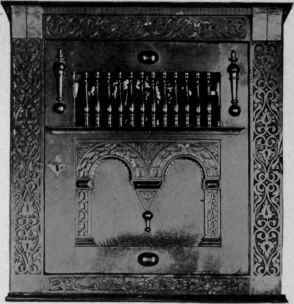
Figure 157. Livery Cupboard, last quarter seventeenth century.
Figure 157 shows a small livery cupboard from the Bulkeley Collection. The stiles and rails are carved in a foliated design similar to the design found on some of the chests. The lower part of the door is in the shape of a double arch, a pendant being substituted for the pilaster in the centre. The pilaster and arches are carved in an imbricated design and in the spandrels are carved foliations. The inner edges of the intrados are scalloped. The upper section of the door is open to admit of the free circulation of air and the space is filled in with balusters, and split balusters and turtle-back bosses ornament the surface. Inside are shelves. The design of this piece shows that it is late.
The picture of the dining-hall at Christ Church College, Oxford (Figure 158), shows a court cupboard beneath the window, which must have been far finer than the bulk of those of the time to which it belongs (sixteenth century). The upper shelf will be seen to be supported by well-carved dragons, the lower by pilasters carved after the manner of Elizabethan pieces, and the centre shelf is ornamented with deeply carved godrooning. This cupboard doubtless represents very fairly the style in which cupboards were built during the fifteenth and sixteenth centuries. Toward the close of the sixteenth century the English records show the court and livery cupboards to have increased in value, and this undoubtedly means that these pieces had been elaborated in some way, probably by the addition of enclosures in the form of cupboards and drawers and also by the addition of ornaments in the form of carving and inlay. This we know to be true, for a number of cupboards dating early in the seventeenth century are preserved in the collections of English museums which have enclosures and drawers and are carved and inlaid.
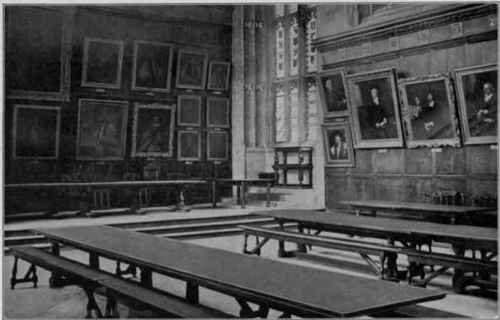
Figure 158. Dining-Hall, Christ Church College, Oxford. (Showing cupboard beneath windows.).
A very few specimens of cupboards with only the upper portion enclosed remain in this country, and the theory that the court cupboard has evolved from open shelves to the fully enclosed cupboards, of which comparatively large numbers remain, is well supported. The upper portion, as we have seen, was first enclosed, the lower remaining an open shelf; then a drawer was added below the middle shelf, and, finally, the lower portion was entirely enclosed, first with cupboards and then with drawers. Properly speaking, then, the terms court and livery do not apply to the cupboards which are to be found in this country, which are, technically speaking, press cupboards, that is, enclosed with doors; but there is every reason to think that these press cupboards were referred to as court and livery, for there is express mention of court cupboards with drawers and livery cupboards with drawers, which are not qualifications of real court or livery cupboards.
Continue to:


My Books

