


Windows. Continued
Description
This section is from the book "The Decoration Of Houses", by Edith Wharton, Ogden Codman Jr. Also available from Amazon: The Decoration of Houses.
Windows. Continued
The effect of a perpetually open window, produced by a large sheet of plate-glass, while it gives a sense of coolness and the impression of being out of doors, becomes for these very reasons a disadvantage in cold weather.
It is sometimes said that the architects of the eighteenth century would have used large plates of glass in their windows had they been able to obtain them; but as such plates were frequently used for mirrors, it is evident that they were not difficult to get, and that there must have been other reasons for not employing them in windows; while the additional expense could hardly have been an obstacle in an age when princes and nobles built with such royal disregard of cost. The French, always logical in such matters, having tried the effect of plate-glass, are now returning to the old fashion of smaller panes; and in many of the new houses in Paris, where the windows at first contained large plates of glass, the latter have since been subdivided by a network of narrow mouldings applied to the glass.
As to the comparative merits of French, or casement, and sash windows, both arrangements have certain advantages. In houses built in the French or Italian style, casement windows are best adapted to the general treatment; while the sash-window is more in keeping in English houses. Perhaps the best way of deciding the question is to remember that "les fentres sont intimement liees aux grandes lignes de l'architecture," and to conform to the rule suggested by this axiom.
The two common objections to French windows - that they are less convenient for ventilation, and that they cannot be opened without letting in cold air near the floor - are both unfounded. All properly made French windows have at the top an impost or stationary part containing spall panes, one of which is made to open, thus affording perfect ventilation without draught. Another expedient, seen in one of the rooms of Mesdames de France at Versailles, is a small pane in the main part of the window, opening on hinges of its own. (For examples of well-designed French windows, see Plates XXX and XXXI).
Sash-windows have the disadvantage of not opening more than half-way, a serious drawback in our hot summer climate. It is often said that French windows cannot be opened wide without interfering with the curtains; but this difficulty is easily met by the use of curtains made with cords and pulleys, in the sensible old-fashioned manner. The real purpose of the window-curtain is to regulate the amount of light admitted to the room, and a curtain so arranged that it cannot be drawn backward and forward at will is but a meaningless accessory. It was not until the beginning of the present century that curtains were used without regard to their practical purpose. The window-hangings of the middle ages and of the Renaissance were simply straight pieces of cloth or tapestry hung across the window without any attempt at drapery, and regarded not as part of the decoration of the room, but as a necessary protection against draughts. It is probably for this reason that in old prints and pictures representing the rooms of wealthy people, curtains are so seldom seen. The better the house, the less need there was for curtains.
In the engravings of Abraham Bosse, which so faithfully represent the interior decoration of every class of French house during the reign of Louis XIII, it will be noticed that in the richest apartments there are no window-curtains. In all the finest rooms of the seventeenth and eighteenth centuries the inside shutters and embrasures of the windows were decorated with a care which proves that they were not meant to be concealed by curtains (see the painted embrasures of the saloon in the Villa Vertemati, Plate XLIV). The shutters in the state apartments of Fouquet's chateau of Vaux-le-Vicomte, near Melun, are painted on both sides with exquisite arabesques; while those in the apartments of Mesdames de France, on the ground floor of the palace of Versailles, are examples of the most beautiful carving. In fact, it would be more difficult to cite a room of any importance in which the windows were not so treated, than to go on enumerating examples of what was really a universal custom until the beginning of the present century.
It is known, of course, that curtains were used in former times: prints, pictures and inventories alike prove this fact; but the care expended on the decorative treatment of windows makes it plain that the curtain, like the portiere, was regarded as a necessary evil rather than as part of the general scheme of decoration. The meagreness and simplicity of the curtains in old pictures prove that they were used merely as window shades or sun-blinds. The scant straight folds pushed back from the tall windows of the Prince de Conti's salon, in Olivier's charming picture of "Le The a l'Anglaise chez le Prince de Conti," are as obviously utilitarian as the strip of green woollen stuff hanging against the leaded casement of the mediaeval bed-chamber in Car-paccio's "Dream of St Ursula".
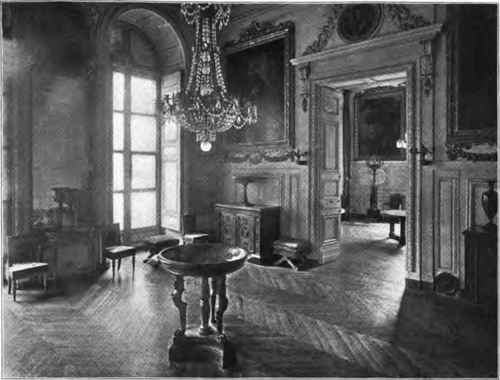
PLATE XIX. SALON DES MALACHITES, GRAND TRIANON, VERSAILLES.
Louis xiv period, (showing well-designed window with solid inside shutter, and pictures forming part of wall-decoration).
Another way of hanging window-curtains in the seventeenth and eighteenth centuries was to place them inside the architrave, so that they did not conceal it. The architectural treatment of the trim, and the practice prevalent at that period of carrying the windows up to the cornice, made this a satisfactory way of arranging the curtain; but in the modern American house, where the trim is usually bad, and where there is often a dreary waste of wall-paper between the window and the ceiling, it is better to hang the curtains close under the cornice.
It was not until the eighteenth century that the window-curtain was divided in the middle; and this change was intended only to facilitate the drawing of the hangings, which, owing to the increased size of the windows, were necessarily wider and heavier. The curtain continued to hang down in straight folds, pulled back at will to permit the opening of the window, and drawn at night. Fixed window-draperies, with festoons and folds so arranged that they cannot be lowered or raised, are an invention of the modern upholsterer. Not only have these fixed draperies done away with the true purpose of the curtain, but they have made architects and decorators careless in their treatment of openings. The architrave and embrasure of a window are now regarded as of no more importance in the decorative treatment of a room than the inside of the chimney.
The modern use of the lambrequin as an ornamental finish to window-curtains is another instance of misapplied decoration. Its history is easy to trace. The mediaeval bed was always enclosed in curtains hanging from a wooden framework, and the lambrequin was used as a kind of cornice to conceal it. When the use of gathered window-shades became general in Italy, the lambrequin was transferred from the bed to the window, in order to hide the clumsy bunches of folds formed by these shades when drawn up. In old prints, lambrequins over windows are almost always seen in connection with Italian shades, and this is the only logical way of using them ; though they are often of service in concealing the defects of badly-shaped windows and unarchitectural trim.
Those who criticize'the architects and decorators of the past are sometimes disposed to think that they worked in a certain way because they were too ignorant to devise a better method ; whereas they were usually controlled by practical and artistic considerations which their critics are prone to disregard, not only in judging the work of the past, but in the attempt to make good its deficiencies. Thus the cabinet-makers of the Renaissance did not make straight-backed wooden chairs because they were incapable of imagining anything more comfortable, but because the former were better adapted than cushioned arm-chairs to the deplacements so frequent at that period. In like manner, the decorator who regarded curtains as a necessity rather than as part of the decoration of the room knew (what the modern upholsterer fails to understand) that, the beauty of a room depending chiefly on its openings, to conceal these under draperies is to hide the key of the whole decorative scheme.
The muslin window-curtain is a recent innovation. Its only purpose is to protect the interior of the room from public view: a need not felt before the use of large sheets of glass, since it is difficult to look through a subdivided sash from the outside. Under such circumstances muslin curtains are, of course, useful; but where they may be dispensed with, owing to the situation of the room or the subdivision of panes, they are no loss. Lingerie effects do not combine well with architecture, and the more architecturally a window is treated, the less it need be dressed up in ruffles. To put such curtains in a window, and then loop them back so that they form a mere frame to the pane, is to do away with their real purpose, and to substitute a textile for an architectural effect. Where muslin curtains are necessary, they should be a mere transparent screen hung against the glass. In town houses especially all outward show of richness should be avoided; the use of elaborate lace-figured curtains, besides obstructing the view, seems an attempt to protrude the luxury of the interior upon the street.
It is needless to point out the futility of the second layer of muslin which, in some houses, hangs inside the sash-curtains.
The solid inside shutter, now so generally discarded, save in France, formerly served the purposes for which curtains and shades are used, and, combined with outside blinds, afforded all the protection that a window really requires (see Plate XIX).
These shutters should be made with solid panels, not with slats, their purpose being to darken the room and keep out the cold, while the light is regulated by the outside blinds. The best of these is the old-fashioned hand-made blind, with wide fixed slats, still to be seen on old New England houses and always used in France and Italy: the frail machine-made substitute now in general use has nothing to recommend it.
Continue to:


My Books

