


Metal Work In Italy, Germany, France, And England. Part 5
Description
This section is from the "Historic Ornament - Treatise On Decorative Art And Architectural Ornament" book, by James Ward. Also see Amazon: Historic Ornament - Treatise On Decorative Art And Architectural Ornament.
Metal Work In Italy, Germany, France, And England. Part 5
About 1750 the forms in silver work partook, in many instances, of the prevailing fashion in the chinaware of that date, though without the extravagance in the decoration. From 1770, and for about ten years later, the designs became more attenuated, and were peculiar in having the dividing lines of the design composed of fillets of beads (Figs. 185 and 187). The beaded style of silversmiths' work and in all metal work, pottery, and furniture of this period was due to the development of classic design that took place in France and in England consequent on the discovery of the buried city of Pompeii in 1770.
The brothers Adam in England designed a good deal of silversmiths' work, of which the three illustrations given are examples of their style. Light wreaths, medallions, fillets of beads, festoons, masks, feet and legs of animals composed the decoration of the Adams' style.
Fig. 179. English Tankard; Seventeenth Century.
Fig. 180. Silver Fire-Dog at Knole Park.

Fig. 181. Silver Table at Windsor Castle.
The brothers John and Robert Adam had travelled in Italy, and had brought with them pronounced classic ideas which not only influenced their own and other contemporary work in architecture and furniture designs, but in silversmiths' work also their influence was widely felt (Fig. 188). In France the classic ideas were also very prevalent about this period in silversmiths' work. The "Louis-Seize" candlestick (Fig. 189) is one of a pair from the Jones Collection in the South Kensington Museum, and is an admirable example of the style; though it is said to have been made at Turin in Italy in 1783, it is certainly of French design. It has the square base so peculiar to French work of this period, with the wreaths and medallions so characteristic of the style in question, that of Louis XVI. -
Another candlestick (Fig. 190) from the Jones Collection is probably Italian in style and manufacture, and belongs to the early part of the eighteenth century. At the time of the Revolution, and immediately after, the style of the silver work deteriorated in France. Vast quantities of plate were seized and sent off to the Mint by the Revolutionary army, and naturally an art like the goldsmith's, that ministered to the needs of luxury, was in those times at a low ebb.
In England in the early part of the nineteenth century some good work was executed from the designs of Flaxman and Stothard, chiefly in the classic style; the Wellington Shield may be mentioned as an example; but about the middle of this century gold and silver work was characterized by even a greater degree of naturalism in design than that of the French debased style from which it was copied. Nothing could exceed the vulgarity and bad taste in the design of silversmiths' work made about fifty or forty years ago. All architectural principles that should guide the design of relief modelling and construction were thrown to the winds, and naturalism unnaturally applied and mixed in any heterogeneous way was quite fashionable. For instance, we have huge *špergnes where stags and other animals from the Highlands of Scotland or the Welsh mountains are decorating silver rock-work from which the tropical palms of Africa are seen to grow out of their clefts, affording grateful shade to the natives of the British moorland. The art of the silversmith in England about this period had suffered more than any other artistic industry, and in the matter of design it seemed to have reached the twilight state of semi-insanity, and was utterly devoid of any artistic merit.
A great improvement is, however, to be seen in the work of respectable firms and in that of many private craftsmen of to-day, but many shop windows are still filled with costly work in the precious metals that are worthless from an artistic point of view.
Fig. 182. Wine Fountain; 1710. (C).
Fig. 183. Candelabrum, Haberdashers' Hall, London. (C).
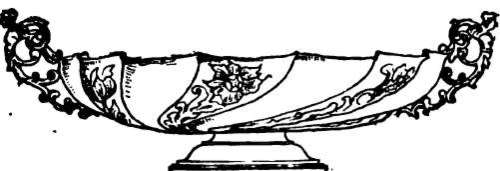
Fig. 184. Eighteenth-Century Bowl. (S. K. M).
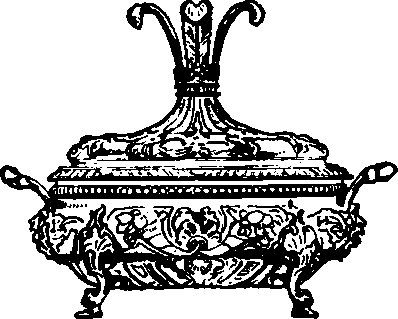
Fig. 185. Tureen at Windsoi -Castle 1773.
Fig. 186. Chocolate Pot; 1777. (C).
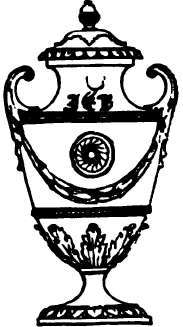
Fig. 187. Silver Vase; 1770.
Fig. 188. Vase by Adam.
Fig. 189. Candlestick, Silver-gilt; Louis Seize. (S. K. M).
Fig. 190. Candlestick, Silver-gilt; Italian; Eighteenth Century. (S. K.M).
Continue to:


My Books

