


Chastly Ornament
Description
This section is from the book "The Art Of Decoration", by H. R. Haweis. Also available from Amazon: The Art Of Decoration.
Chastly Ornament
The passion for bringing monumental ideas into every domestic detail affected colour with form naturally. It was greatly encouraged by Louis XIII., under whom they sculptured everything - the caskets, the mantelshelves, the doors, the very trees in the garden - into columns, arches, or geometric figures, the elements of architecture; and their 'ever-veering fancy,' swift as Ettarre's, turned to the sharp contrast of ebony with white metal or ivory as a recoil from the bright colours in furniture that had begun to wrestle with the dazzling walls. Everything began to recall the coffin-lid. And as for pictures, the grim penance of Mary of Egypt (unnatural union of a frame formed for love and joy with wilful wretchedness), the flaying of Marsyas, the dissecting table, and like subjects, were set on the walls to raise the spirits.
So sepulchral ebony heralded in the morbid attraction for horrors, developing perhaps from the general senti-mentalism, such as the Worship of Wreck. Burial and exhumation being fixed ideas in the mind of society, death and destruction were subjects to be played with and made pretty.
They did not make them pretty, though skulls were introduced into the pictures of the most seductive women: though the courts adopted funereal trinkets, and the merriest ladies pursued pleasure with death's-heads and cross-bones embroidered on their dresses, people sniffed essences from skull pomanders, consulted skull watches, and wore crossbone rings - liked the semblance of decay everywhere, and cultivated a charming chair de poule even at the dinner-table; objects which were perhaps intended to remind people that they ought to mend their ways, but which only preached the doctrine, 'Let us eat and drink, for to-morrow we die.'
To this period belong the nasty little ivory corpses with worms protruding, such as we find in every curiosity shop. To this period also belong the disagreeable monuments in Westminster Abbey whereon skeleton Deaths wrestle and box for the moribund.
Of course all contemporary art was not morbid or disgusting; and even if we put out of court those many immortal names which made the early Renascence a living movement - Diirer, Holbein, Leonardo, Michael Angelo and the rest - the average designers show a wondrously high standard of ability and sense of grace and humour; indeed the Renascence grotesque could have hardly become so popular had it not been that the knowledge of proportion, notably of the animal frame, •was to a great extent common property.
Many were the elegant pieces of furniture now to be seen in museums, such as the Cluny,1 and private collections, whereon the tiny pediments, friezes, and engaged columns (for all mimicked architectural structure) were covered with mythological and other scenes carved with incredible delicacy or etched with marvellous spirit and freedom; though the accurate proportions only increased the doll's-house look of them. Many were the works on which the grotesque union of animal limbs with foliage or shells was clever and decorative without being disagreeable, as in figs. 28 and 29, pp. 109, MI.
The fitful vagaries of domestic decoration and array, in dead-colour and mock horror, did not hinder the Renascence from being an epoch of supreme skill in colouring; while in many cases where taste seems entirely at fault, as in the above-named cabinets, the construction is exquisite, the treatment fascinating by mere littleness, like a baby's hand, and we waste time while scoffing (as we were meant to waste it) in investigating the ever-novel vagaries about the sides. As we pore into the tiny portals we think of the hapless Princess in Mme. D'Aulnoy's fairy-tale who was befriended by little pagodins - which at any moment may step forth and speak to us! Perhaps that imaginative but not moral lady derived her idea from the art which accompanied her luxurious life.
1 E.g., Nos. 601, 603, 594 & 592 Cluny Museum, described on p. 168.
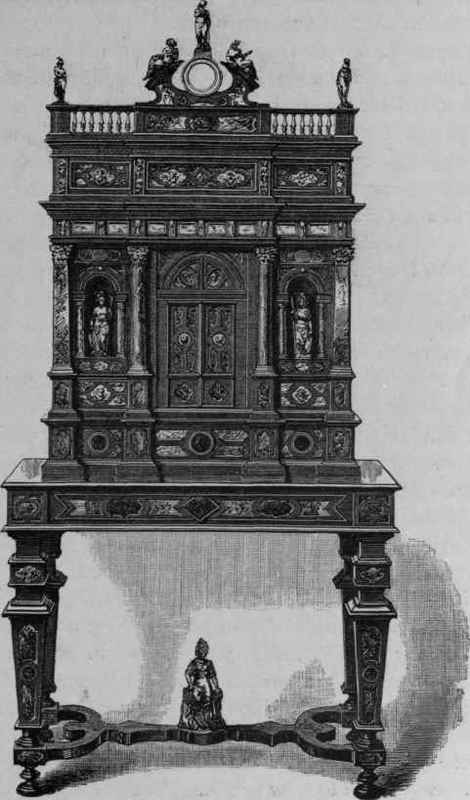
Fig. 9, Cabinet showing architectural fashions in furniture.
Continue to:


My Books

