


Cess-Pools In Water-Closets
Description
This section is from the book "Improved Plumbing Appliances", by J. Pickering Putnam. Also available from Amazon: Improved Plumbing Appliances.
Cess-Pools In Water-Closets
Fig. 7 shows the champion of the odor generators, the well-known pan closet. After what has been said about sediment-chambers in connection with lavatories, further remarks on the evils of the container of this foul device are unnecessary. It serves as the best illustration of a breach of our first law of plumbing that we could find. The bad smells generated in the capacious cess-pool escape very easily into the house through the bearings of the pan-axle and the several other imperfect joints, which are usually to be found about the complex and flimsily constructed machine. Still enough foul air is generally left in the cess-pool to emit a very strong and unpleasant puff whenever the pan is emptied to displace it. The cake of filth, sometimes over an inch thick, which lines the interior of the container, is evidently capable of furnishing an absolutely inexhaustible supply of this foul air, vulgarly supposed to be an indispensable accompaniment of plumbing work. Sprinklers and flushing rims have been invented to remove the accumulations, but they are only partially effective and are not worth the outlay they require. There always remain parts, especially around the pan journal, which cannot be flushed properly, and the incrustation in the receiver is retarded but not prevented. Porcelain and enameled iron receivers have been used to mitigate this evil, but they cannot remove it.
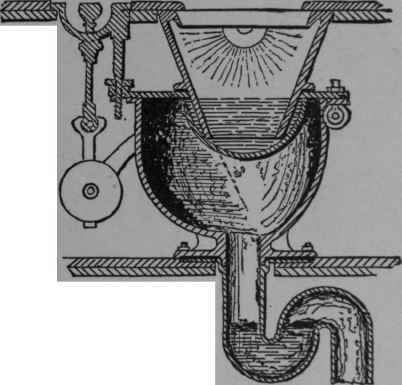
Fig. 7. - The Ordinary Pan Closet, after several years of usage.
It is sometimes argued in defence of the pan-closet that it has an advantage in using but little water in flushing. No greater mistake than this could be made. The water used does not flush the closet. The waste matters are simply dropped by the flushing operation from one part of the apparatus into another, which is out of sight. Here they remain in whole or in part to putrefy. Several flushings are always necessary to remove any part of the filth, whereas an ocean of water, applied through the pan, could not remove the whole of it.
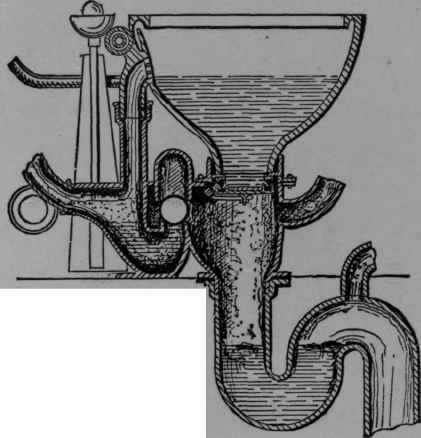
Fig. 8. - Valve-closet, showing places where deposits may collect.
Fig. 8 represents a valve and Fig. 9 a plunger closet. The receivers in these appliances are smaller than in the pan-closet, but they are still cess-pools, and in some kinds of valve and plunger closets they prove formidable filth collectors. They must contain, moreover, overflow passages, and the fouling surface is thereby increased.
Compared with the pan-closet, this much may be said:
They are generally more carefully and strongly built, and for this reason are to be preferred to the latter, but in principle they are inferior. Where the pan-closet receiver is enameled, ventilated and provided with a powerful sprinkler, and where all parts of the closet are strongly and carefully made and put together, so that in short its cost is as great as that of the valve or plunger-closet, the greater size of its receiver does not become a more serious matter than the complicated construction of the valve or plunger-closet and their general unreliability.
Ninety-nine out of a hundred of the pan-closets set to-day are, however, without the modern improvements referred to. They have received the unqualified condemnation of sanitarians, and no plumber can be excused for recommending them. The valve and plunger-closets are equally to be condemned, though their careful and solid construction has until lately screened their inherent imperfections.
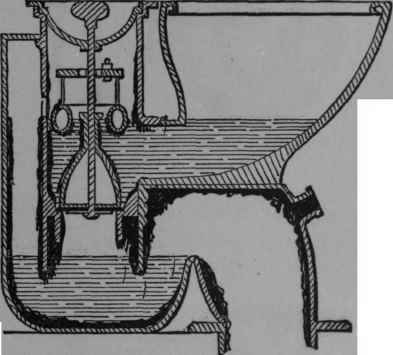
Fig. 9. - Plunger closet, showing places where deposits may collect.
The improved water-closet of to-day contains no sediment chamber or receiver whatever, and works without mechanical parts of any kind in the closet to eject the waste matters. Every function of the pan, valve or plunger can be better accomplished by simpler means, and therefore their entire abandonment in time may be looked for with certainty and without regret.
Continue to:


My Books

