


Food Seasoning. Promoting
Description
This section is from the book "Food - What It Is And Does", by Edith Greer. Also available from Amazon: Food: What it is and Does.
Food Seasoning. Promoting
Natural flavor of food is nature's indication of the food needed and even of the amount needed. Seasoning, the French say, would better be reduced to salting only than be a mixture of seasonings that conceal natural food-flavors.
Condiments that develop natural food-flavors are advisable. Some spices develop the flavors of each other and can be used together; some foods do this, as cabbage and squash together.
Seasoning should be incorporated in food as it is prepared, except where this will change unfavorably the constitution of foods. Salting string beans at the beginning of cooking toughens them. Salting meat before it is seared draws out the juices. Vanilla added to a hot mixture evaporates, because it itself vaporizes at relatively low temperature.
Excessive seasoning may be destructive of food itself as well as of its flavor. By hardening fiber, food is rendered less digestible, so less nutritious. By artificial heightening of flavor overstimulation of the digestive tract increases appetite for artificial food and more food than is needed. Excess of seasonings also introduces substances into the digestive tract that it cannot take care of in quantity. These may harden the tissues of its walls or cause overactive peristalsis.
As a child usually wishes to see sugar on a sweetened food, many adults desire to salt food. Though both salt and sugar are very necessary in a diet, in great excess they are harmful and may disorder digestion. It is important to cultivate a taste for well-seasoned food by eating it rather than becoming accustomed to flavorless food or excessive seasoning.
Dressings on food, as cream and salad dressings, containing egg and oil or milk and flour increase nourishment as well as palatability by uniting the food-ingredients and seasoning or flavoring the foods. Tart food-dressings stimulate peristalsis.
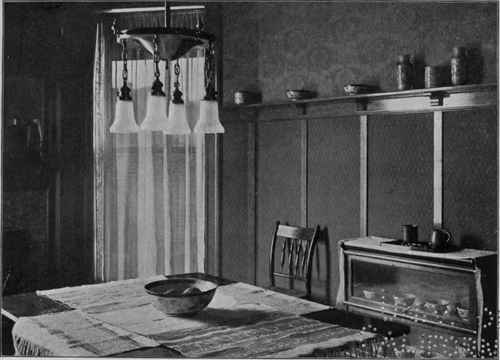
A MODERN DINING-ROOM.
Continue to:


My Books

