


Poppy, Papaver, In Var
Description
This section is from the book "The Wild Garden", by W. Robinson. Also available from Amazon: William Robinson: The Wild Gardener.
Poppy, Papaver, In Var
The huge and flaming Papaver orientale, P. bracteatum, and P. lateritium, are the most important of this type. They will thrive and live long in almost any position, but the proper place for them is in open spots among strong herbaceous plants. For the wild garden or wilderness the Welsh Poppy (Meconopsis cambrica) is one of the best plants. It is a cheerful plant at all seasons ; perched on some old dry wall its masses of foliage are very fresh, but when loaded with a profusion of large yellow blossoms the plant is strikingly handsome ; it is a determined coloniser, ready to hold its own under the most adverse circumstances. Its home is the wall, the rock, and the ruin. It even surpasses the Wallflower in adapting itself to strange out-of-the-way places ; it will spring up in the gravel walk under one's feet, and seems quite happy among the boulders in the courtyard. It looks down on one from crevices in brick walls, from chinks where one could scarcely introduce a knife-blade, and after all it delights most in shady places. No plant can be better adapted for naturalising on rough stony banks, old quarries, gravel pits, dead walls, and similar places, and its large handsome flowers will lend a charm to the most uninteresting situations.
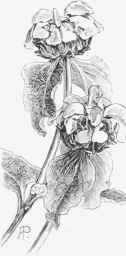
Phlomis. Type of handsome Labiates ; admirably suited for the wild garden. See p. 154.
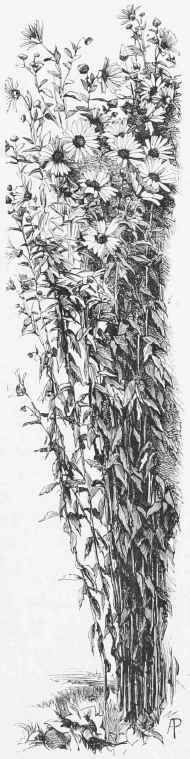
The tall Ox-eye Daisy (Pyrethrum serotinum).
Continue to:


My Books

