


Recipes For Game Pies
Description
This section is from the book "The Epicurean", by Charles Ranhofer. Also available from Amazon: The Epicurean, a Complete Treatise of Analytical and Practical Studies on the Culinary Art.
Recipes For Game Pies
(2317). Plover Pie - Large, Hot (Gros Pate Chaud De Pluviers)
Make a hot pie crust the same as for Bontoux (No. 2314). Bone one dozen plovers or more according to the size of pie; stuff them with game quenelle forcemeat (No. 91), into which incorporate one-eighth of an inch squares of truffles and range them in a sautoir one beside the other; moisten with a little mirepoix stock (No. 419) prepared with white wine and cook on a moderate fire until done: then lay them in another sautoir with espagnole sauce (No. 414) reduced with game fumet (No. 397), and a garnishing of mushroom heads and medium-sized peeled truffles; when all the ingredients are very hot fill the hot pie crust and serve.
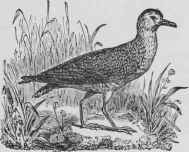
Fig. 392.
Plover - (Pluvier)
(2318). Patties With Gravy - Small (Petits Pates Au Jus)
Take one pound of lean meat from the thick loin end and free it of fat and sinews: chop and pound it with five ounces of chopped fat salt pork, and two ounces of bread crumbs; season with salt and pepper, and chopped parsley. Line some round channeled tartlet molds with fine foundation paste (No. 135); cover the bottoms with a layer of the above forcemeat, set in the middle a ball of salpicon a la finaneiere with truffles (No. 667), and finish with another layer of the forcemeat: cover with a flat of foundation paste (No. 135), place on this around flat of thin puff paste (No. 146) one inch in diameter, egg over, and with the point of a knife make a fanciful rosette on the top. Let cook for half an hour in a slack oven; remove, lift off the covers, and pour in some half-glaze (No. 413) with Madeira wine: unmold and serve.
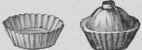
Fig. 428.
(2319). Woodcock Pie - Hot (Pate Chaud De Beasses)
Bone six very clean, singed woodcock, keeping the heads which should be cleaned, the eyes imitated with quenelle forcemeat, and a round piece of truffle for the pupil; cook the intestines in butter, and when cold pass through a sieve and mix them with some game quenelle forcemeat (No. 91), seasoned highly with salt, pepper, duxelle, and chopped parsley; stuff the birds with this, enclose well the dressing, and lay them in bottomless oval molds the same size as themselves; cover with bards of fat pork, and cook in a moderate oven. Make a fumet (No. 397) with the bones, adding to it some espagnole sauce (No. 414) in the act of being reduced; take away a third, and to the remaining two-thirds add some truffles and mushrooms; let both garnishing and birds be cold. Line a hot pie mold (Fig. 152) with foundation paste ( No. 135), leaving it reach above the top; fill the center with the birds and garnishing alternated, then wet the top part of the paste, and cover over with a flat of the same; make an edge reaching half an inch above the level of the mold, pinch it on the side and top, and decorate the summit either with noodle paste (No. 142), forming an aperture in the center, or puff paste parings; egg over twice; bake in a hot oven for an hour and a quarter to an hour and a half; add a gill of Madeira wine to the remaining two-thirds of sauce and pour it into the hot pie, then serve.
(2320). Potted Tenderloin Of Beef A La Nelson (Terrine De Filet De Boeuf A La Nelson)
To prepare this dish it will require a covered pie dish which can stand the heat of the oven. Cut slices from a well-trimmed tenderloin of beef free of sinews, and season them with pepper and salt; cover the bottom of the pie dish with a layer of good butter, spread over this some minced onions, and on the onions a bed of minced potatoes. Season with salt and pepper, and set the slices of tenderloin on top. Place the pie dish over a hot fire for a few minutes, then put it into a moderate oven for forty-five minutes; add a tablespoonful of clear gravy (No. 404), and the same quantity of meat glaze (No. 402), Worcestershire sauce, and mushroom catsup; sprinkle over the surface chopped hard-boiled eggs and parsley. Serve it on a dish over a folded napkin.
(2321). Poulpetonniere Of Pigeons (Poulpetonniere De Pigeons)
To be made with two pigeons. Line a bottomless oval mold two inches high by six inches long and four inches wide with thin slices of fat pork, place over an eighth of an inch thick layer of godiveau (No. 82). Mix in a bowl two spoonfuls of cooked fine herbs (No.:385)and two spoonfuls of sweetbread parings or roast veal, either of these to be chopped up, mixing it in well; season with salt and pepper, and add some reduced veloute sauce (No. 415). Lay a layer of this in the oval mold, over this lay two pigeons cut in four pieces, fried in butter, then drained and moistened with a little gravy (No. 404) and brown sauce (No. 414), cooked for half an hour and cooled. Spread over some fine herbs, finishing with another layer of godiveau; cook in a slack oven, remove the mold, dress and pour over the remainder of the potted pigeon sauce after it has been strained and thickened with butter.
Continue to:


My Books

