


Recipes For Edible Snails (Escargots)
Description
This section is from the book "The Epicurean", by Charles Ranhofer. Also available from Amazon: The Epicurean, a Complete Treatise of Analytical and Practical Studies on the Culinary Art.
Recipes For Edible Snails (Escargots)
A shelled snail. The snails intended for eating are those that feed on aromatic plants. They are nourishing, but difficult to digest, are unsuitable for weak stomachs, and always require to be well seasoned. Broths are made from snails and are found to be very soothing for any irritability of the stomach.
(1013). Edible Snails, To Prepare (Escargots, Preparation)
Should the snails be taken from grape vines, either in the spring time or autumn, they must be put into a cage, and starved for eight days. If they be purchased in the winter in the markets, they are then closed and ready to cook; in the latter case, wash them well in tepid water to break the openings and remove the glue, then put them into a vessel with fresh water and salt, and let them disgorge for twelve hours (the vessel to be covered with a grater to prevent the snails escaping); afterward wash them again in several waters. Put the snails into a stock pot with water and a pinch of potash; cook until the meats can be removed from the shells - half an hour will suffice for this, thru drain and pick them out of the shells. Wash the meats in several waters, suppressing the green vein found in the thinnest part of the snail, then range them in a small earthen pot lined with fat pork; add an onion, a bunch of aromatic herbs, a clove of garlic, a few spoonfuls of brandy, and moisten to their heighth with broth and white wine; close the pot, fasten the cover down with paste, and let cook over a slow fire or gas stove for six hours. When the snails are well done remove, and let them cool off in their own broth.
Wash well the shells and let them dry before using.
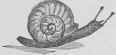
Fig. 270.
(1014). Edible Snails, Bordelaise And Saintonge (Escargots A La Bordelaise Et A La Sain- Tonge)
Bordelaise
Cook the snails as explained in No. 1013; fry in butter some onions, carrots and celery root; cut in three-eights of an inch squares, sprinkle over some flour, and moisten with white wine and fish stock (No. 195), add the cooked snails without the shells, and when hot, thicken with kneaded butter and finish with fine herbs and lemon juice.
A La Saintonge
(Small snails.) After they are cooked as above, put them back into their shells, and fry them in butter, shells and all, adding a crushed and chopped clove of garlic, salt and pepper; moisten with white wine, thicken with an allemande sauce (No. 407), bread-crumbs, butter and parsley.
(1015). Edible Snails A La Bourguignonne (Escargots A La Bourguignonne)
After the snails have been prepared according to No. 1013 put a little clear gravy (No. 404) into each shell, then one or two snails from which suppress the thin and pointed end; close the opening with a thick layer of fresh butter, mixing in with it salt, black pepper, parsley and chives both chopped, lemon juice and a little fresh bread-crumbs. Arrange the shells on a metal dish provided with a grater for the purpose of upholding the snails, let cook for a few moments and serve them very hot accompanied with a silver skewer to remove the snail from its shell. Metal or earthen dishes are expressly made having the bottom indented to receive the snails.
(1016). Edible Snails, Provencal, And With Provencal Butter (Escargots A La Provencale Et Au Beurre De Provence)
Prepare and cook the snails as for No. 1013, fry in oil without browning, some shallots, mushrooms, garlic, and parsley, all to be finely chopped and seasoned with salt, pepper, and nutmeg, add a little flour, stir well and moisten with white wine and fish stock (No. 195), reduce thoroughly to the consistency of a sauce. Fill the shells by putting into each one, one or two snails according to their size, finish filling with the sauce, and cover with bread-crumbs, besprinkle with butter, and heat them in a hot oven.
With Provencal Butter
Cook and prepare the snails as for No. 1013, set at the bottom of each shell a little of the following butter: Stir into some butter finely chopped parsley, onions, and crushed garlic, and finely cut up thyme and bay leaf, season with salt, black and red pepper, pound and press through a sieve. Set the snails on this butter and finish filling the shells with the same and some fresh bread-crumbs, range them on a dish, and place them in the hot oven: serve when the butter boils in the shell. Accompany these snails with a small silver pick to remove the insides.
Continue to:


My Books

