


Women Speakers
Description
This section is from "Every Woman's Encyclopaedia". Also available from Amazon: Every Woman's Encyclopaedia.
Women Speakers
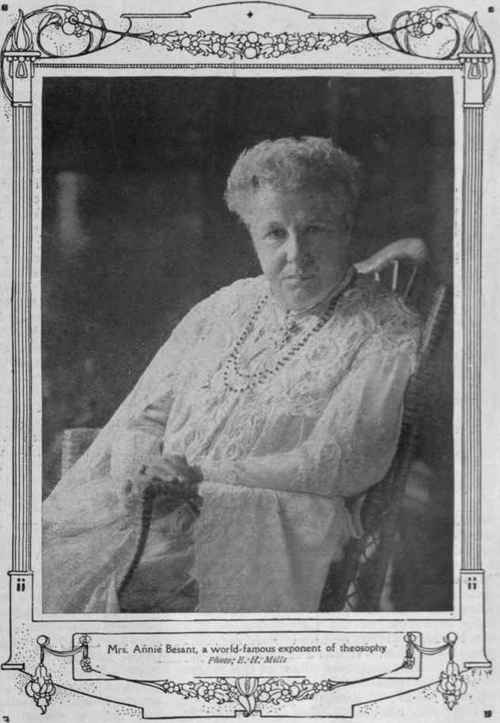
In our own land we find examples of the triumphs of women as public speakers in the calm, dignified, and yet impassioned utterances of the late Mrs. Josephine Butler when pursuing her campaign against legalised vice, in the marvellous oratory of Lady Henry Somerset upon the temperance platform, and in the magnetic eloquence of Mrs. Annie Besant, whether advocating some great popular cause or expounding the mysteries of theosophy.
It need scarcely be said that the burning question of the hour, the controversy on Woman Suffrage, has produced women speakers of remarkable eloquence. The names of the leaders of the various sections of the women's movement need not be enumerated; they fill the newspapers and cover the hoardings, and each one of them can command and enthral vast audiences.
But what is perhaps still more remarkable is the latent gift of oratory developed by so many of the rank and file in the movement. Young girls and elderly matrons, who have never before spoken from a public platform, will make a " maiden " speech with astonishing ease and fluency.
Women are scoring triumphs, too, as political speakers, and each of the great parties in the State is deeply indebted to the eloquence of its feminine adherents upon the public platform.
In the pulpit, women are numerous in the United States of America, and a brilliant example is familiar by her visits to this country in Dr. Anna Shaw. Of another type is that scholarly preacher the Rev. Gertrude von Petzold, while the vast organisation of the Salvation Army, covering as it does every quarter of the globe, exhibits the influence of women as religious preachers and teachers. The Army, indeed, owes its chief inception to that moving preacher the late Catharine Booth.
In the art of music, women are beginning to score triumphs as composers. Miss Ethel Smyth, Mus.doc, the author of "The Wreckers," scored a distinct triumph as the first Englishwoman to compose a grand opera. Women are excelling as songwriters, and in the front rank is Madame Alicia Adelaide Needham, who came prominently before the public in 1902 as the winner of the £100 prize for the best march song in honour of the Coronation of Edward VII. Three hundred British composers competed. It was a thrilling moment for the woman composer when, at the Albert Hall Coronation Concert, she heard the massed bands, conducted by Sir Frederick Bridge, play her march.
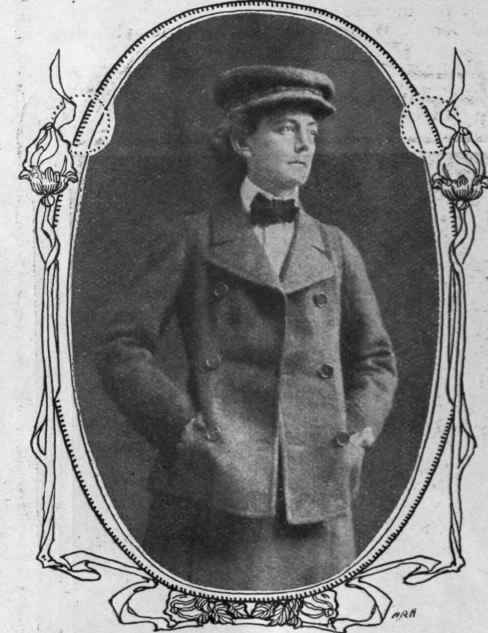
Miss Ethel Smyth, Mus.doc., author of "The Wreckers" and many other works, and the first Englishwoman to compose a grand opera
Photo, Kate Pragnell
Madame Needham has several times been honoured as the author of the best original song at the Irish Musical Festival.
Miss Rosalind Ellicott, member of the Incorporated Society of Musicians, who made her debut with an overture, performed at the Gloucester Festival in 1886, may be mentioned amongst successful musical composers, as also that of Madame Liza Lehmann.
When we pass to the realm of musical executants and vocalists, names crowd in upon us. We think of the triumphs of those great pianists, Madame Clara Schumann, Miss Fanny Davies, and Mile. Natalie Janotha, while as violinists we have women equal to the best masters in the persons of the late Lady Halle and Miss Marie Hall.
Continue to:


My Books

