


Liqueurs. I. Continued
Description
This section is from the book "Drinks Of The World", by James Mew. Also available from Amazon: Drinks of the world,.
Liqueurs. I. Continued
The search for the philosopher's stone and the powder of projection was by no means wholly fruitless. It strengthened the hands of chemistry. It was also the cradle of liqueurs. In the early part of the middle ages the learned inhabitants of the convents devoted their leisure time, of which they appear to have had no lack, to the so-called magnum opus. The magnum opus, the quintessence, the elixir of long life, were three different denominations of one and the same thing. Monkish intellectual toil was chiefly connected at that time with the study of essences, spirits, alcohols, and distillations. The plants which they sought with the greatest eagerness were rosemary, arnica, elder, camomile, sweet trefoil, rose, borage, balm mint, snake weed, iris, etc.
1 According to their first institution the Jesuits were not priests. This was conceded to them afterwards by Paul V. Their primitive principal occupation was the assistance of the sick and the distillation of salutiferous waters, whence they were known as "padri dell' acquavite," or Fathers of brandies.
2 A liqueur made with the flower of citron.
In the thirteenth century, Arnold de Villeneuve, a celebrated physician, possessed with this devil of a magnum opus, formulated the question of the quintessence or elixir of long life in these terms, which became afterwards a dogma for all his monastic successors. "This is the secret, viz., to find substances so homogenous to our nature that they can increase it without inflaming it, continue it without diminishing it ... as our life continually loses somewhat, until at last all is lost." The outcome of the long and patient labours of the monkish alchemists was certain elixirs and liqueurs, of which the secret composition was transmitted from generation to generation in convents and monasteries. Such liqueurs were in their origin simply a pharmaceutic product. It is only within the last few years comparatively that they have been converted into delicacies after dinner. Our age bears the hall mark of positivism. The monks labour no longer for the sole glory of God and comfort of the sick. Their object at the present day is to effect, it is affirmed, a ready and productive sale.
It may be so; happily it is not our business to determine. It is certain that a vast development has taken place in the manufacture of the majority of the monk-ish liqueurs. The Chartreux of L'isère now realize annual benefices of considerable value, of which a portion is said to be contributed to the continually dimin-ishing Papal exchequer, under the title of Peter's pence. Of this medicinal liqueur the active and benevolent element is gathered from herbs scattered on the Alpine mountains cold, or on the slopes of the Pyrenees, or in the sombre forests of the north (see the Prospectus), or in the shops of the apothecaries. But they all assuredly depend upon cognac for their element of life. Benedictine, with its four cabalistic letters, A M D G,1 is made by the monks of Fécamp, at the famous Carthusian monastery of La Grande Chartreuse, near Grenoble. The elixir of long life, de Sept-fonds, is made in a convent of the Trappists of I'a Hier, and Trappistine is the work of the good fathers of the abbey of La Grâce-dieu (Doubs). It is, however, affirmed that only Chartreuse, coloured yellow or green at will, and Trappistine, are the works of religious hands, while all other liqueurs are made by the laics. The methods of fabrication em-ployed in the convents are now well known.2 Bene-dictime is the only liqueur which has escaped analysis. Absinthe is not strictly a liqueur. It substitutes bitter for sweet. This strong spirituous liquor, so prejudicial to French health and morality, is, however, Commonly called a liqueur. Its base is an alcoholate, composed of anise, coriander, and fennel. It is flavoured with wormwood, a species of artemisia, and other plants containing absinthin. It is said to be commonly coloured with indigo and sulphate of copper. It is prepared chiefly in Switzerland, but much of it is made at Bordeaux.
1 Ad majorem Dei gloriam.
2 Rofet's "Manuel du distillateur-liquoriste."
Arnold de Villeneuve, in his medical treatise, written in Latin, On the preservation of youth and the retardation of age, has a sermon upon Golden water. "I have not," he says, "read the properties of this water in books of distinguished authority, but it is to be presumed that, if it exists, it is so sublime a work that they have concealed the method of its preparation, and have even refused to mention its name. Of gold, however, they have spoken, and set it among cordial medicines. They have praised it for the comforting of the heart and for the palliation of leprosy. It is possible that since we every day find things diversified by alteration of substance, acquiring the operations of those other things into which they have been transformed, so out of wine may be made a water of life very different from wine both in colour and in substance, in effect and in operation. And the doubt here is, not about the fact, but how it is brought about. That the bodies of all metals may be reduced into water by the ingenuity of mankind, experience allows us not to question; but the operation and nature of those things by which this end is obtained it is no easy matter to discover."
This golden water was originally nothing else than eau de vie in which had been macerated certain herbs and aromatic spices to give it taste and colour; afterwards minute portions of metallic gold were added. The ingredients mentioned by Arnold de Villeneuve are rosemary flowers, from which, he says, the water obtains its golden colour, cinnamon, grains of paradise, cloves, cubebs, liquorice, and the like.
In the mind of the middle ages, gold was held to be a remedy for every ill. Many people applied themselves to the task of dissolving this metal and rendering it potable. It was put into drinks, baths, victuals, pills, and the pharmacopeia of the time abounds in elixirs of gold, tinctures of gold, drops of gold, and so on. To please the public eye, those pieces of the precious metal were cast into the composition which we now know as Eau de vie de Dant-zig.
Catherine de Medieis brought into France all the voluptuous discoveries and superfluities of Italy, and helped to augment considerably the number of new liqueurs and to popularize their usage. Henry II. was especially fond of the anisette of Marie Brizard of Bordeaux. Sully, in 1604, examining the objects of luxury in France, found Populo and Rossolio to have the chief share in the public estimation and expenditure. Of them Populo is mentioned in the Letters of Gui-patin.1 It was composed of spirits of wine, water, sugar, musk, amber, essence of anise, and essence of cinnamon.
Rossolio, our Rossolio, or Rossoli, said to be derived, in consequence of its extreme excellence, from the dew of the sun, ros solis, was made of burnt brandy, sugar, and the juice of sweet fruits, such as cherries or mulberries. Louis XIV. was much attached to this particular liqueur. That prepared for him was said to differ a little from the ordinary compound. A receipt is given of the king's drink.
1 Gui-patin Lettres, ii. 425.
Equal quantities of eau de vie and Spanish wine, in which were infused anise, coriander, fennel, citron, angelica, and sugar-candy dissolved in camomile water, and boiled to a thick syrup, were a distinctive feature in this royal liqueur.
Owing to oblivion or ignorance of the anisette of Henri II. this monarchical recognition of rossolio has led to the supposition that liqueurs were invented to invigorate the senile decrepitude of Louis XIV., but it has been shown that they existed long before his time. George IV. is said to have been attached to liqueurs in much the same way as Louis XIV., who may have supposed that they in some measure improved his health or arrested his decay.
The liqueur industry is chiefly continental, and the liqueurs are very numerous. Holland is famous for its Curacoa and Russia for its Kummel, and almost every large district of France has its own speciality of liqueur. Bordeaux1 is remarkable for its Anisette, Dijon for its Cassis, Marseilles for its Absinthe, Grenoble for its Ratafias, and Paris and Lyons are each noted for many different kinds.
1 One of the most important liqueur manufactories is that of Marie Brizard and Roger of Bordeaux. In 1755 Marie Brizard, in the Quartier S. Pierre, a lady of much devotion and charity, devoted a large portion of her time, in imitation of the monks, to the concoction of medicinal cordials. Of these, her Anisette, so called from its chief ingredient, soon attained a wide reputation. Roger married the niece of this lady, and the firm is now known under their joint nanties. They manufacture many other liqueurs, but are still chiefly famous for the old medicinal cordial.
The English have attained as yet no high rank as liqueur manufacturer. The prosaic nature of the Trade Returns includes ail liqueurs of foreign origin under the heading of "Sweetened or mixed Spirits." It. makes no distinction between Eaux and Crèmes or between Ratafias and Elixirs. We have been told that elixirs are yellow and aromatized, and eaux or crèmes white, while ratafias are substantially infusions of fruit. Originally this may have been so. It is not the case at present.
Both Elixir and Ratafia are interesting from an etymological standpoint. The latter word has excited considerable discussion. Menage, writing it as it was commonly written in his time, ratafiat, says it is a term derived from the East Indies. Leibnitz, on the contrary, holds it to be a corruption of rectifie applied to alcohol. Another etymology is rata fiat. Parties were supposed to enter into a contract, and after drinking the liqueur to say, "Let it be ratified."
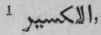
Elixir l is an Arabic word derived from the Greek, by which the alchemists denoted their powder of projection or philosophera stone.
alacsir, from Gr.

dry.
Continue to:


My Books

