


Typical American Tea Bush
Description
This section is from the book "Beverages And Their Adulteration Origin, Composition, Manufacture, Natural, Artificial, Fermented, Distilled, Alkaloidal And Fruit Juices", by Harvey W. Wiley. Also available from Amazon: Beverages And Their Adulteration.
Typical American Tea Bush
The character of the growth, size, shape and appearance of the tea bush is well illustrated by the figure herein, showing one of the typical tea orchards grown at Summerville, South Carolina.
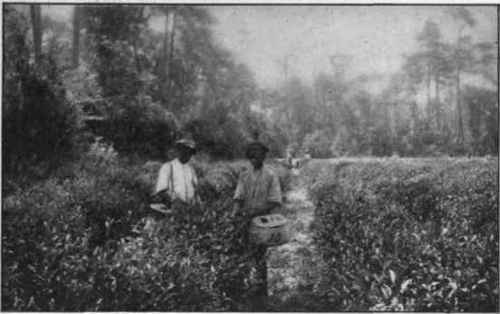
Fig. 13. Tea bush at "Pinehurst," Summerville, S. C. (Courtesy of the late Dr. Shepard.)
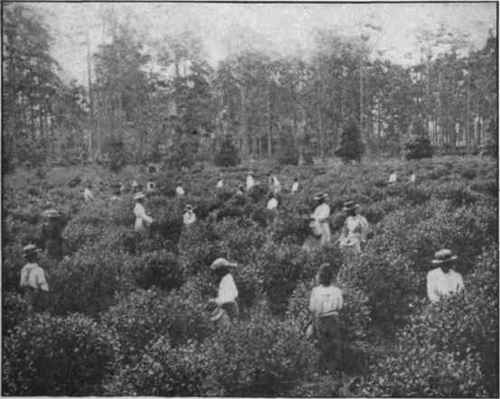
Fig. 14. Colored children plucking tea at "Pinehurst," Summerville, S. C. (Courtesy of the late Dr. Shepard.)
The tea bush requires a large amount of nourishment, and also intensive cultivation, as well as fertilization, and, therefore, tea gardens require soil as rich as can be secured. The greater the fertility of the soil originally, the less the expense of fertilization and the greater the economy of growth. In this country a rich loam, according to Dr. Shepard, containing a large amount of humus, affords the best promise for both quantity and quality. Recent investigations have shown that an abundance of available phosphoric acid in the soil contributes largely to the flavor of the tea made thereon.
The tea plant, according to the same authority, has generally a long tap root, hence a rich, readily penetrable sub-soil has its advantages, but it must be free from stagnant water, which the tea bush cannot tolerate. Slightly sloping land, sufficient to secure natural drainage, but not steep enough for heavy rains to carry off the most valuable top-soil, is preferable. Where the surface is too sloping, well-placed banks and ditches can be employed to prevent denudation, but all such devices are costly and interfere with the cultivation of the land. In the present condition of cultivation, Dr. Shepard advises that only the cleared land be utilized, as the cost of destroying a forest or of eradicating a jungle, and converting the soil therein to a proper condition for the growth of the bush, requires an amount of labor which is prohibitive to successful culture. Importance is also attached to the shipping facilities, both because of the convenience in bringing in supplies, as well as for the transportation of the products of the garden to the markets. It is realized that in the United States the fulfilment of all the conditions necessary to the successful and profitable cultivation of the tea plant is yet far in the future. It may be that the ingenuity of the inventor, the care and intelligence of the supervisor, and the skill of the laborer may in the future establish, preserve and extend the tea industry in the United States to such an extent as shall be worthy of mention among the commercial centers of tea production of the world.
Dr. Shepard says:
The establishment of a tea garden on a commercial scale in any country involves the expenditure of a considerable amount of money and a rather long wait for a pecuniary return. It demands very careful attention in the field and factory, but especially in the marketing of a new product. Such was peculiarly the case with Ceylon, where the planters have been forced to roundly tax themselves to successfully introduce their new teas on the foreign markets. As the scope of supervision embraces not only agricultural operations, but also the working of a factory filled with machinery regulated by the watch and thermometer, it follows that the services of a capable and, therefore, expensive superintendent are required.
The substitution of machinery for all the manual operations except plucking and final culling has become imperative from the motive of economy and the necessity of observing every precaution against the contamination of the tea from human handling, as well as for greater ease in the maintenance of uniformity of production.
As has been already stated the aim of the American grower should be the production of the higher grades of tea by a wise selection of seed, by limiting the plucking to the youngest and smallest, hence tenderest and most valuable leaf, and by the careful use of the latest and best machinery. Repeated chemical analysis has proven that American tea is comparatively rich in the nerve stimulant and food, thein, and low in tannin, the astringent and deleterious principle; it is not subject to the wily Oriental's passion for adulteration with artificial coloring and make-weight matter; it escapes, for home consumption, the injurious effect of a long ocean transportation, whereby chests are broken and dampness and all manner of germs admitted. Indeed, because relieved from this last danger, American tea has not to be "fired" at the high temperatures requisite for resisting long voyages, but which are at the sacrifice of both fragrance and taste.
While we cannot agree with Dr. Shepard that thein or caffein, is a food nor that tannin is its injurious principle; nor would many agree with his ideas that transportation injured the value of the tea, we must admit that his enthusiasm, his intelligence, his industry and his patience in working out this problem are deserving of all commendation.
Continue to:


My Books

