


The Troy Epidemic
Description
This section is from the book "Beverages And Their Adulteration Origin, Composition, Manufacture, Natural, Artificial, Fermented, Distilled, Alkaloidal And Fruit Juices", by Harvey W. Wiley. Also available from Amazon: Beverages And Their Adulteration.
The Troy Epidemic
A more recent outbreak of typhoid fever, due to a polluted water supply, occurred in Troy, Pennsylof Health.) vania, in October, 1912. In a town of 700 persons there were 232 cases, practically 33 percent of the population. Fortunately the outbreak was not very virulent. The mortality for this reason was low, amounting to only 8.19 percent. This infection was due to a connection between the West Branch of Sugar Creek and one of the reservoirs supplying the town with water. According to the official report by the Health Commissioner of the state, a direct communication had been made between the Creek and collecting system, both through a perforated barrel and also along the upper side of the diverting wall beneath the bed of the Creek. A coloring matter, fluorescein, was placed in the perforated barrel 550 feet above the collecting reservoir, and the color occurred in the reservoir within 20 minutes. When placed in the Creek just above the diverting wall, it appeared in the reservoir 55 feet distant in 33 seconds. The illustration shows the placing of the coloring matter in the West Branch of Sugar Creek, by means of which the connection with the reservoir was demonstrated.
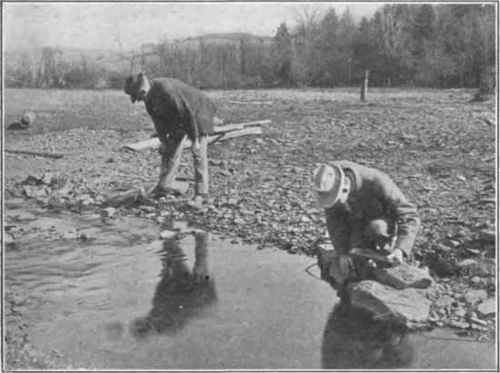
Fig. 4. Studying contamination of water at Troy, Pa. (Pennsylvania State Dept.
Continue to:


My Books

