


The Bernardos Arc-Welding Process
Description
This section is from the book "Welding Theory, Practice, Apparatus And Tests Electric, Thermit And Hot-Flame Processes", by Richard N. Hart. Also available from Amazon: Welding: Theory, Practice, Apparatus And Tests, Electric, Thermit And Hot-Flame Processes.
The Bernardos Arc-Welding Process
This arc-welding process is an evolution of the electric furnace. In the electric furnace of Moissan and others the electrodes were both carbon, and the metal to be melted was placed between the carbons in the path of the arc. De Meritens substituted the metal itself for one of the carbons; and later Bernardos, a

Fig. 10. - Zerener blowpipe apparatus.
Russian, perfected the process. Coffin has taken out similar patents in America. The Bernardos process has been known in Europe for more than twenty years, and has recently been introduced into this country. Welding heat is obtained by the electric arc. The metal to be welded or melted is the positive pole. The negative pole is a carbon pencil. The current used is direct, of 100 to 300 volts, and 600 to 1000 amperes. The metal to be welded lies on a metal table to which the positive pole is clamped. The carbon negative is placed in contact with the metal and the current is thrown on. The carbon pole is then withdrawn 2 to 4 inches, and an arc is sprung, which follows the carbon wherever the carbon is manipulated by the operator. The greater part of the heat of the arc, about 3500 deg. Cent., is generated in the metal or is reflected back on the metal from the arc. The apparatus used is as follows:
1. Generator of direct current of 100-300 volts and 600-1000 amperes.
2. A metal table on which to place the work.
3. Leads, switches, and controlling apparatus for the current, carbon pencil.
4. Protective apparatus for the workman.
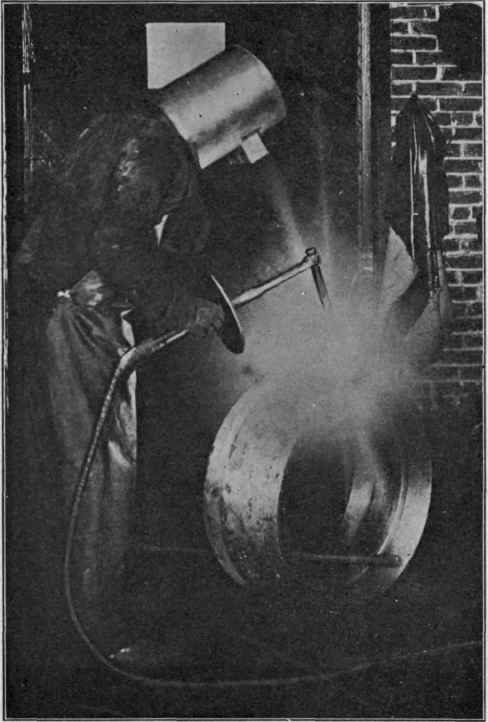
Fig. 11. - Operator welding with Bernardos arc process.
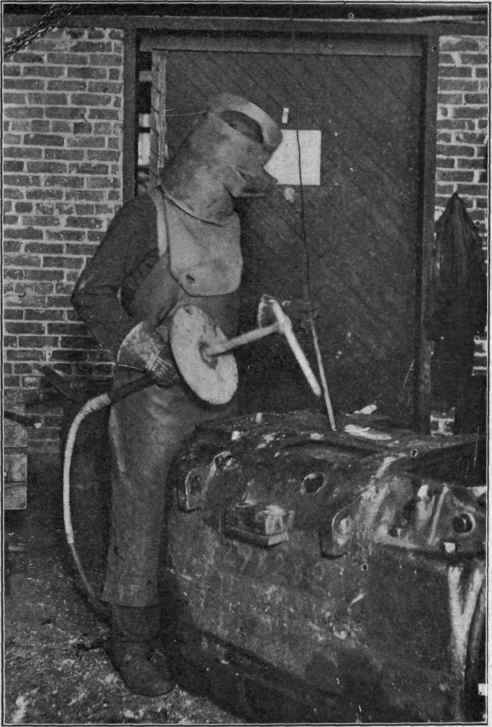
Fig. 12. - Operator welding with Bernardos arc process. (Courtesy proceedings of the Engineering Society of western Pennsylvania, May, 1909, C. B. Auel.)
Continue to:


My Books

